PEM Qualification and Screening for
High-Reliability Electronics
Table of Contents
Bridging the Gap Between COTS Performance and High-Reliability
Commercial plastic-encapsulated devices are not automatically suitable for a high-reliability mission.
Plastic-encapsulated microcircuits and discrete semiconductors can provide performance, availability, package, and technology options that are not available in traditional hermetic product families. They can also introduce uncertainty in materials, moisture response, process history, lot traceability, construction consistency, radiation behavior, and long-term reliability.
PEM qualification and screening reduce that uncertainty by building mission-specific evidence around the device family, the submitted lot, the package construction, the expected environment, and the program’s accepted risk posture. Qualification and screening are complementary, but they do not answer the same question.
AAA Engineering & Test Lab performs customer-defined PEM qualification and screening testing using NASA PEM-INST-001, SAE AS6294/1 through AS6294/4, applicable JEDEC and J-STD methods, MIL-STD-883 for microcircuits, MIL-STD-750 for discrete semiconductors, MIL-STD-202 for applicable electronic and electrical component parts, MIL-STD-1580 for DPA, and program-specific requirements.
Discuss a PEM Qualification or Screening Program
PEM Qualification and Screening Services Available from AAA
AAA Engineering & Test Lab performs customer-defined PEM qualification, screening, construction analysis, and lot-evaluation testing using NASA, SAE, JEDEC, J-STD, MIL-STD, and program-specific requirements. AAA can deliver the electrical, environmental, physical-analysis, moisture, assembly, radiation, and reporting evidence required by an approved mission-specific assurance plan.
- Qualification-plan, requirement, manufacturer-data, and lot-data review
- Device categorization, risk review, and sample-allocation planning
- Baseline, interim, and post-stress electrical characterization
- Room, hot, and cold electrical testing
- Moisture classification, dry-pack controls, floor-life tracking, bake, and preconditioning
- Temperature cycling, humidity, environmental stress, burn-in, and steady-state life
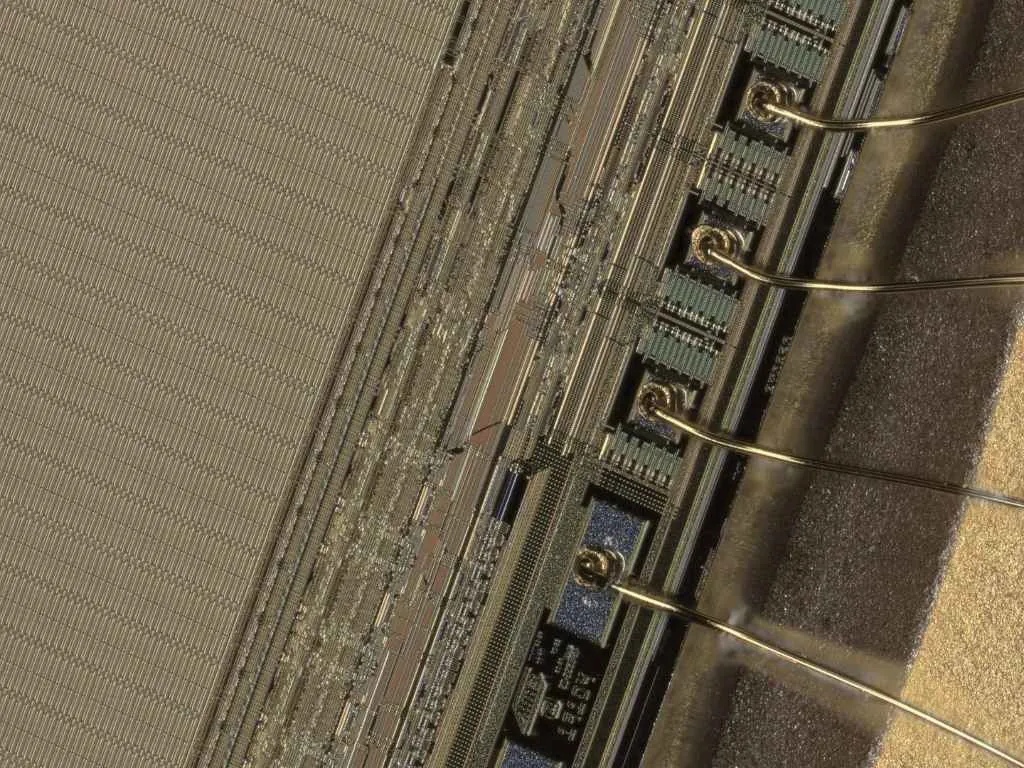
- Radiographic inspection, acoustic microscopy, DPA, and construction analysis
- Internal visual, bond-strength, bond-pull, die-shear, SEM/EDS, XRF, and cross-section analysis
- Radiation-effects testing or coordination for TID, SEE, and displacement-damage requirements
- Failure analysis of qualification, screening, radiation, and construction anomalies
- Integrated engineering data, deviation records, and qualification or lot-evaluation reporting
What PEM Qualification and Screening Determine
- Qualification: Builds evidence about the suitability of a device design, technology, construction, or family for the intended application and mission profile.
- Screening: Applies defined stresses and electrical tests to identify and remove defective units and reduce early-life failures within a submitted lot.
- Lot evaluation. Assesses whether the specific manufacturing lot shows acceptable electrical, construction, material, and process evidence.
- Construction integrity. Uses DPA, radiography, acoustic microscopy, cross-sectioning, bond evaluation, die shear, and internal inspection where required.
- Moisture and assembly risk. Evaluates how a nonhermetic package responds to moisture absorption, storage, handling, preconditioning, and solder-reflow exposure.
- Radiation evidence. Addresses total ionizing dose, single-event effects, displacement damage, or other applicable threats through program-specific analysis and testing.
- Mission suitability. Combines device, lot, construction, environmental, electrical, radiation, and application evidence for the responsible program authority’s decision.
Qualification and Screening Answer Different Risk Questions
PEM Qualification
Qualification asks whether the design, technology, construction, and available evidence support use in the defined mission. It may use manufacturer information, historical data, similarity analysis, construction analysis, accelerated stresses, electrical testing, radiation evidence, and application-specific evaluation.
PEM Screening
Screening asks whether the submitted lot contains defective or early-failing units that should be removed before integration. The screening flow may include baseline electrical testing, temperature exposure, temperature cycling, burn-in, post-stress electrical testing, visual inspection, and other program-defined steps.
DPA and Lot Acceptance
DPA examines representative samples to evaluate internal construction and workmanship. Lot acceptance uses the defined sampling, test, and acceptance structure to determine whether the submitted lot provides acceptable evidence for the program.
Radiation Hardness Assurance
Radiation assurance is a separate evidence stream. Environmental and electrical qualification does not establish response to the mission radiation environment.
How PEM Assurance Applies Across the Program Lifecycle
Part Selection
Evaluate whether the device provides a necessary functional or availability advantage and whether a more established high-reliability alternative exists.
Supplier and Traceability Review
Assess manufacturer, authorized-source status, lot and date-code information, handling history, process-change information, and available construction or qualification data.
Family or Technology Qualification
Build evidence around design and technology suitability using available data, similarity, construction analysis, accelerated stress, electrical performance, and application requirements.
Lot Screening and Acceptance
Apply the defined screening and destructive subgroup plan to the actual production lot intended for use.
Assembly and Integration Control
Use moisture classification, dry-pack controls, floor-life tracking, bake, preconditioning, reflow limits, and ESD controls to protect the qualified evidence.
Production and Change Monitoring
Reevaluate when wafer fabrication, assembly site, mold compound, die revision, package, lead finish, process, or supplier changes materially affect the qualified baseline.
Anomaly Investigation
Use failure analysis and additional physical or electrical testing when qualification or screening produces unexpected results.
When Programs Use PEM Qualification and Screening
- A required function, package, performance level, or technology is unavailable in a traditional hermetic product family.
- A commercial device is being considered for space, defense, avionics, or another high-reliability application.
- A new device family, manufacturer, assembly site, lot, date code, package, or process change requires evidence.
- A program needs a qualified alternate source or an obsolescence replacement.
- The device is nonhermetic and moisture, reflow, delamination, corrosion, or package-integrity risk must be addressed.
- The submitted lot requires screening before integration.
- Radiation data are missing, not lot-representative, or not directly applicable to the mission environment.
- Construction analysis is needed to assess die, bond, package, material, or process consistency.
- The program must document an accepted risk posture rather than rely on commercial qualification data alone.
Have Questions?
Submit the contact form below and one of our electrical testing experts will connect with you right away.
How Mission Risk Drives the PEM Plan
There is no universal PEM qualification or screening package. The plan must be tailored to the device family, package construction, mission duration, operating environment, radiation environment, repairability, consequence of failure, available manufacturer evidence, traceability, lot size, and program risk classification.
- Device family. Plastic-encapsulated microcircuits and plastic-encapsulated discrete semiconductors require different test methods and failure-mechanism considerations.
- Space, military, avionics, and other high-reliability applications do not impose identical mission, access, environment, or assurance requirements.
- Qualification evidence. Commercial qualification, automotive qualification, historical data, similarity, and manufacturer data can inform the plan but may not cover the intended application.
- Lot specificity. Commercial process changes, multiple assembly sites, limited wafer traceability, and material changes may make lot-specific evidence necessary.
- Package sensitivity. Moisture absorption, reflow profile, mold compound, die size, lead frame, laminate, bond system, and package geometry influence the stress plan.
- TID, SEE, displacement damage, technology, bias, dose rate, and mission environment require separate technical treatment.
- Sample allocation. The plan must reserve sufficient samples for screening, qualification, DPA, radiation, control groups, resampling, and failure analysis.
Governing Standards and Technical Frameworks
- NASA PEM-INST-001. Defines a GSFC product-assurance system that separates screening, qualification, DPA, radiation assessment, derating, handling, storage, source control, and lot-specific mission evidence.
- AS6294/1. Addresses plastic-encapsulated microcircuits in space applications.
- AS6294/2. Addresses plastic-encapsulated microcircuits in military and avionics applications.
- AS6294/3. Addresses plastic-encapsulated discrete semiconductors in space applications.
- AS6294/4. Addresses plastic-encapsulated discrete semiconductors in military and avionics applications.
- J-STD-020. Classifies moisture and reflow sensitivity for nonhermetic surface-mount devices.
- J-STD-033. Controls handling, packing, shipping, exposure tracking, floor life, shelf life, drying, and use of moisture- and process-sensitive devices.
- JESD22-A113. Simulates assembly moisture and multiple-reflow exposure before subsequent reliability testing.
- JESD22-A101. Defines steady-state temperature-humidity bias life testing for moisture-related reliability mechanisms.
- JESD22-A110. Defines highly accelerated temperature and humidity stress testing (HAST).
- JESD22-A118. Defines accelerated moisture resistance using unbiased HAST.
- JESD22-B116. Defines the wire bond shear test method.
- MIL-STD-883. Provides environmental, mechanical, electrical, screening, visual, radiographic, and physical-analysis methods for microcircuits used within PEM qualification and screening programs.
- MIL-STD-750. Provides environmental, mechanical, electrical, visual, radiographic, bond, life, and DPA-related methods for discrete semiconductor devices and is especially relevant to qualification and screening.
- MIL-STD-202. Provides standardized environmental, physical, mechanical, and electrical methods for applicable electronic and electrical component parts. Within PEM and COTS assurance programs, AAA performs the applicable MIL-STD-202 methods identified below when the approved qualification or screening plan requires thermal-shock, humidity, solderability, soldering-heat, or related component-level evidence.
- MIL-STD-1580. Provides the governing DPA framework for destructive construction and workmanship evaluation across applicable EEE part families. Within PEM programs, MIL-STD-1580 can invoke or connect to applicable MIL-STD-883, MIL-STD-750, and MIL-STD-202 methods based on device type and the approved DPA plan.

Key PEM Qualification and Screening Methods
AAA Engineering & Test Lab performs the applicable MIL-STD-883, MIL-STD-750, MIL-STD-202, JEDEC, and J-STD methods identified below when they are invoked by the approved PEM qualification or screening plan. AAA has achieved DLA suitability for the applicable MIL-STD-883 methods within its approved scope. MIL-STD-1580 provides the DPA framework that connects the destructive construction-analysis methods to the broader PEM evidence package.
Moisture Classification and Assembly Preconditioning
- J-STD-020. Determines the moisture and reflow sensitivity level of the package.
- J-STD-033. Controls the handling and exposure conditions needed to preserve the classified device.
- JESD22-A113. Preconditions nonhermetic surface-mount devices before reliability testing using moisture and reflow simulation.
Environmental and Reliability Stress
- JEDEC / J-STD environmental and moisture methods
- JESD22-A101. Applies steady-state temperature, humidity, and electrical bias to evaluate moisture-assisted reliability mechanisms in nonhermetic integrated circuits.
- JESD22-A110. Applies highly accelerated temperature and humidity stress with bias to evaluate moisture-related reliability mechanisms.
- JESD22-A118. Applies unbiased HAST to evaluate accelerated moisture resistance without electrical bias.
- MIL-STD-883 microcircuit stress methods
- MIL-STD-883 TM 1010 Temperature Cycling. Evaluates microcircuit response to repeated temperature extremes where invoked.
- MIL-STD-883 TM 1005 Steady-State Life. Evaluates microcircuit behavior under sustained operating stress.
- MIL-STD-883 TM 1015 Burn-In Test. Applies operating stress to precipitate early-life failures under the controlling screening plan.
- MIL-STD-750 discrete-semiconductor stress methods
- MIL-STD-750 TM 1051 Temperature Cycling (Air to Air). Evaluates discrete-semiconductor response to repeated air-to-air temperature extremes.
- MIL-STD-750 TM 1031 High-Temperature Life (Nonoperating). Provides high-temperature nonoperating stress where invoked by the qualification or screening plan.
- MIL-STD-750 TM 1032 High-Temperature (Nonoperating) Life (Sample Plan). Provides the applicable sample-plan route for high-temperature nonoperating life evidence.
- MIL-STD-202 component environmental and process methods
- MIL-STD-202 TM 103 Humidity (Steady State). Evaluates component response to controlled high-humidity exposure and moisture-related degradation mechanisms.
- MIL-STD-202 TM 107 Thermal Shock. Evaluates component response to rapid transitions between specified temperature extremes.
- MIL-STD-202 TM 208 Solderability. Evaluates whether component terminations meet the specified solder-wetting and solderability requirements.
- MIL-STD-202 TM 210 Resistance to Soldering Heat. Evaluates component resistance to the thermal stresses associated with soldering processes.
Electrical Screening
- Baseline electrical characterization. Establishes the pre-stress performance reference.
- Interim and post-stress electrical testing. Identifies drift, degradation, failure, and parameter-specific changes.
- Room, hot, and cold testing. May be required to assess grade, margin, or application-relevant behavior.
- MIL-STD-750 TM 4011 Forward Voltage. Provides method-defined forward-voltage measurement for applicable discrete semiconductor devices and can support baseline, interim, or post-stress electrical evidence when invoked by the test plan.
Construction Analysis and DPA
- MIL-STD-1580. Governs the DPA framework used to define destructive sequence, sample handling, construction and workmanship evaluation, evidence retention, and reporting for applicable EEE part families.
- MIL-STD-883 TM 2009 External Visual. Evaluates external microcircuit workmanship and visible package conditions before destructive opening.
- MIL-STD-883 TM 2012 Radiography. Provides nondestructive internal imaging before destructive analysis.
- MIL-STD-883 TM 2010 Internal Visual (Monolithic). Evaluates internal microcircuit construction and workmanship after opening.
- MIL-STD-883 TM 2013 Internal Visual Inspection for DPA. Provides DPA-specific internal visual inspection where invoked.
- MIL-STD-883 TM 2011 Bond Strength (Destructive Bond Pull Test). Evaluates interconnection strength and records failure mode.
- MIL-STD-883 TM 2019 Die Shear Strength. Evaluates die-attach mechanical integrity and separation mode.
- MIL-STD-883 TM 2018 Scanning Electron Microscope Inspection of Metallization. Evaluates applicable metallization features and step coverage.
- MIL-STD-883 TM 2021 Glassivation Layer Integrity. Evaluates the protective glassivation layer where invoked.
- MIL-STD-750 discrete-semiconductor construction-analysis methods
- MIL-STD-750 TM 2071 External Visual and Mechanical Examination. Evaluates visible external and mechanical conditions of applicable discrete semiconductor devices.
- MIL-STD-750 TM 2076 Radiography. Provides nondestructive internal imaging for applicable discrete semiconductor constructions.
- MIL-STD-750 TM 2101 Destructive Physical Analysis for Diodes. Provides diode-specific destructive physical analysis requirements.
- MIL-STD-750 TM 2102 Destructive Physical Analysis for Wire-Bonded Devices. Provides DPA requirements for applicable wire-bonded discrete devices.
- MIL-STD-750 TM 2074 Internal Visual Inspection (Discrete Semiconductor Diodes). Provides internal visual inspection for applicable diode constructions.
- MIL-STD-750 TM 2037 Bond Strength (Destructive Bond Pull Test). Evaluates discrete-device interconnection strength and failure mode.
- JESD22-B116 Wire Bond Shear Test Method. Provides wire-bond shear evidence for applicable ball-bond and wire-bond constructions.
- Acoustic microscopy, cross-sectioning, decapsulation, SEM/EDS, XRF, and related analytical techniques provide complementary package-interface, materials, and construction evidence where required.
Radiation Assurance
- Total ionizing dose. Evaluates cumulative ionizing-radiation degradation under defined bias, dose, and test conditions.
- Single-event effects. Evaluates event-driven device response under the relevant particle and energy environment.
- Displacement damage. Evaluates non-ionizing energy loss effects where applicable to the device technology and mission.

How a PEM Program Is Structured
1. Define the Mission and Risk Posture
Identify application, mission duration, environment, consequence of failure, repairability, radiation threats, operating conditions, and program authority.
2. Select and Categorize the Device
Review technology, package, manufacturer, source, commercial qualification, temperature rating, construction, availability, and alternatives.
3. Collect Manufacturer and Lot Evidence
Gather datasheets, qualification reports, process-change notices, assembly-site information, lot and date-code data, radiation data, and traceability.
4. Build the Qualification and Screening Matrix
Map family-level evidence, lot-specific testing, DPA, electrical screening, environmental stress, radiation, controls, sample quantities, and acceptance criteria.
5. Control Moisture, ESD, Storage, and Handling
Preserve device condition through receipt, dry-pack control, floor-life tracking, bake, preconditioning, ESD handling, and sample segregation.
6. Execute Baseline and Stress Testing
Perform defined electrical, environmental, burn-in, life, radiation, and assembly-simulation activities.
7. Perform Destructive Subgroup Analysis
Evaluate representative samples for construction, bond, die attach, metallization, glassivation, delamination, and other specified attributes.
8. Evaluate Results and Deviations
Correlate test data, DPA findings, failures, drift, lot variability, and deviations against the approved plan.
9. Deliver the Evidence Package
Provide the records needed for the customer or cognizant authority to make the mission-suitability and lot-disposition decision.
PEM Qualification and Screening Capabilities
- Device categorization and qualification-plan development
- Traceability and technical-document review
- External visual and dimensional inspection
- Radiographic inspection
- Moisture and reflow sensitivity evaluation
- Preconditioning and assembly simulation
- Temperature cycling, humidity, and environmental stress
- Baseline, interim, and post-stress electrical testing
- Burn-in and life testing
- DPA, decapsulation, internal visual, bond testing, die shear, SEM/EDS, acoustic microscopy, and cross-section analysis
- MIL-STD-750 discrete-semiconductor environmental, electrical, visual, radiographic, bond, life, and DPA-related testing
- MIL-STD-202 TM 103, 107, 208, and 210 testing for applicable component environmental, moisture, solderability, and soldering-heat evidence
- MIL-STD-1580 DPA planning and execution across applicable EEE part families
- Radiation-effects evidence where required by the approved program
- Failure analysis of qualification and screening anomalies
- Controlled sample tracking and engineering reporting
PEM Qualification and Screening Deliverables
AAA’s PEM deliverable package is expected to connect every test, sample subgroup, and result to the approved qualification or screening plan. The final evidence package supports the responsible program authority’s mission-suitability, lot-disposition, change-control, and risk-acceptance decisions.
- Approved qualification, screening, DPA, radiation, and sample-allocation matrix
- Device, manufacturer, package, technology, source, lot, date-code, and traceability records
- Manufacturer qualification data, similarity rationale, process-change information, and identified data gaps
- Baseline, interim, and post-stress electrical data with parameter drift or failure identification
- Moisture, handling, preconditioning, reflow, environmental, burn-in, and life-test records
- Radiographic, acoustic, DPA, internal visual, bond, die-shear, SEM/EDS, XRF, and cross-section evidence as applicable
- Radiation test data, coordination records, or applicability analysis as defined by the plan
- Failures, anomalies, deviations, resampling decisions, and failure-analysis results
- Construction, process, lot, and change-control observations
- Engineering summary of evidence, limitations, unresolved risks, and recommended follow-on actions
- Final qualification or screening report package with supporting data, plots, images, and certificates as required
What PEM Results Can Show
- Whether the available family and technology evidence supports the defined qualification plan
- Whether the submitted lot contains early-life, electrical, construction, workmanship, or process anomalies
- How the package responds to moisture, preconditioning, reflow, temperature, humidity, operating stress, and other defined conditions
- Whether construction and material findings are consistent across the sampled population
- Whether measured drift or failures require resampling, additional screening, failure analysis, supplier escalation, or rejection
- Which evidence supports the program’s mission-suitability and lot-disposition decision
What PEM Qualification and Screening Cannot Establish
- Testing cannot create quality that was not designed or manufactured into the device. Screening can remove detected defects; it cannot screen quality into a deficient design or process.
- No generic test flow creates a universal space-grade component. Suitability remains tied to the specific mission, application, lot, construction, and accepted risk.
- Passing screening does not equal qualification. Screening addresses the submitted lot; qualification addresses design, technology, and mission suitability.
- Commercial qualification data are not automatically mission qualification. AEC, JESD, manufacturer, or historical data may not cover the required environment or consequence of failure.
- Environmental testing does not establish radiation suitability. Radiation evidence must address the applicable threats and technology.
- DPA does not replace electrical, life, environmental, or radiation evidence. It addresses internal construction and workmanship.
- Testing alone does not prove authentic provenance. Traceability and counterfeit-risk evaluation remain separate.
Common PEM Program Misapplications
Treating Qualification and Screening as the Same Activity
The two activities answer different risk questions and require different evidence.
Applying One Standard to Every Plastic Semiconductor
PEMs have different device structures, methods, and failure mechanisms. Space and military or avionics applications also differ.
Using Fixed Stress Conditions Without Mission Context
A published example condition may be inappropriate for the device, package, reflow process, radiation environment, or program risk.
Assuming a Same Part Number Means the Same Construction
Commercial devices may change wafer fabrication, assembly site, mold compound, die revision, lead finish, or process while retaining the same marketed part number.
Treating MSL as Long-Term Reliability Qualification
J-STD-020 classifies moisture and reflow sensitivity; it does not establish mission life.
Ignoring Handling After Qualification
Moisture, ESD, storage, floor-life, and reflow controls must preserve the qualified device condition through integration.
When PEM Qualification and Screening Alone Are Not Sufficient
- Radiation Hardness Assurance. Required when the mission includes TID, SEE, displacement damage, or other radiation threats.
- Failure Analysis. Required when qualification or screening identifies an unexplained failure, drift, or construction anomaly.
- System and Board-Level Qualification. Required where package-level evidence does not capture assembly, thermal, power, software, mechanical, or system interactions.
- Counterfeit Detection. Required where source history, traceability, remarking, material substitution, or identity inconsistency is the primary concern.
- Supplier Process Evidence. Required when the qualification decision depends on manufacturer-controlled wafer, assembly, material, process-change, or reliability data.
- Ongoing Change Control. Required to preserve qualification applicability when the device or production baseline changes.
Credentials Relevant to PEM Work
PEM programs rely on controlled environmental, electrical, physical-analysis, radiation, and handling processes. AAA maintains quality, laboratory, ESD-control, security, and method-specific credentials applicable to its confirmed scope.
Where the plan invokes one or more exact test methods, the proposal and reporting package should identify the governing method, condition, sample allocation, and reporting requirements explicitly. AAA Engineering & Test Lab’s current laboratory credentials and suitability documents are available on the Accreditations & Certifications page, or the directly on the DLA’s list for commercial laboratories suitable for testing military devices here.
How to Evaluate a PEM Qualification Laboratory
- Qualification and screening separation. The laboratory should explain which activities address family or technology suitability and which address the submitted lot.
- Mission-based tailoring. The plan should map the device, package, application, environment, radiation threats, and accepted risk to the selected evidence.
- Construction-analysis depth. DPA, radiography, acoustic microscopy, cross-sectioning, bond evaluation, die shear, and microscopy should be available where required.
- Electrical test capability. Fixtures, bias, temperature, parameter coverage, datalogging, and post-stress comparison must match the device and plan.
- Moisture and reflow control. The laboratory should distinguish MSL classification, handling, preconditioning, and reliability stress.
- Radiation integration. Radiation evidence should be planned with the device technology, lot, bias, dose, and mission environment in mind.
- Sample allocation and controls. The plan must reserve samples for screening, qualification, DPA, radiation, controls, resampling, and failure analysis.
- Change and deviation management. Unexpected failures, drift, missing data, or process changes should trigger documented engineering decisions.
- Reporting quality. The final package should connect each result to the approved plan and clearly identify limitations, deviations, and unresolved risks.
What AAA Needs to Quote PEM Qualification or Screening
- Manufacturer, part number, device family, package, technology, and temperature grade
- Intended application, mission profile, operating conditions, consequence of failure, and program risk class
- Applicable requirement set, revision, customer flow, or qualification plan
- Manufacturer qualification data, process-change notices, reliability data, and radiation data
- Lot, date code, assembly site, source, traceability, and quantity available
- Screening quantity and destructive subgroup allocation
- Electrical parameters, temperatures, bias, fixtures, vectors, and acceptance limits
- Moisture, reflow, environmental, burn-in, life, and radiation requirements
- Known anomalies, previous testing, failures, or supplier concerns
- Reporting, review, schedule, sample-retention, and escalation requirements
PEM Qualification and Screening FAQs
Does AAA Engineering & Test Lab perform PEM qualification?
Yes. AAA supports customer-defined qualification programs for plastic-encapsulated microcircuits and other confirmed plastic-packaged semiconductor devices using NASA, SAE, JEDEC, MIL-STD, and program-specific requirements.
Does AAA perform PEM screening?
Yes. AAA supports lot-specific PEM screening using the electrical, environmental, burn-in, life, visual, and physical-analysis activities defined by the approved screening plan.
Can AAA support NASA PEM-INST-001 qualification and screening?
Yes. AAA performs customer-defined PEM qualification, screening, DPA, handling, and lot-specific testing based on NASA PEM-INST-001 and can deliver the radiation evidence required by the approved program.
Does AAA support AS6294 PEM qualification?
AAA performs qualification testing aligned with the applicable AS6294 family document for confirmed device types and applications.
Does AAA perform DPA as part of PEM qualification?
Yes. AAA performs DPA and has achieved DLA suitability for specific MIL-STD-883 test methods, and supports MIL-STD-750 visual, radiographic, bond, die-shear, SEM, and glassivation methods used within PEM construction analysis.
Does AAA perform MIL-STD-883 TM 1015 Burn-In for PEM screening?
Yes. AAA performs MIL-STD-883 TM 1015 Burn-In and has achieved DLA suitability for the method within its approved scope.
Does AAA perform MIL-STD-883 TM 1010 Temperature Cycling?
Yes. AAA performs MIL-STD-883 TM 1010 Temperature Cycling and has achieved DLA suitability for the method within its approved scope.
Can AAA qualify a commercial component for space use?
AAA can generate test and analysis evidence for a customer-approved mission-specific qualification plan. Testing does not create universal space-grade status or replace the responsible program authority’s suitability decision.
What information does AAA need to quote a PEM program?
AAA needs the device identity, application, mission environment, program risk requirements, lot and traceability information, available manufacturer data, electrical parameters, sample quantity, required stresses, radiation needs, reporting requirements, and schedule.
What is the difference between PEM qualification and PEM screening?
Qualification builds evidence about the suitability of the device design, technology, and construction for the mission. Screening applies defined stresses and electrical tests to the submitted lot to remove detected defects and reduce early-life failures.
Can testing convert a commercial component into a space-grade component?
No. Testing can reduce uncertainty and generate mission-specific evidence, but it cannot create missing design or manufacturing quality or establish universal space-grade status.
Why is lot-specific testing often required?
Commercial products may have limited wafer-to-assembly traceability, multiple production sites, material changes, die revisions, and process variation. The same marketed part number may not guarantee an unchanged construction baseline.
What is the difference between J-STD-020 and J-STD-033?
J-STD-020 classifies moisture and reflow sensitivity. J-STD-033 controls handling, packing, shipping, floor life, shelf life, drying, and use based on that sensitivity.
Does preconditioning qualify the device?
No. JESD22-A113 simulates assembly exposure before subsequent reliability testing. It creates the test condition; it is not the complete qualification.
Does every PEM program require radiation testing?
Not every application has the same radiation environment. The program must assess the relevant threats and determine whether existing data, analysis, or lot-specific testing is required.
Can one qualification cover future lots?
Only if the program’s similarity, traceability, process control, and change-management rules support continued applicability. Material changes, assembly-site changes, die revisions, or other baseline changes may require reevaluation.
How does MIL-STD-1580 fit into PEM qualification?
MIL-STD-1580 provides the DPA framework for destructive construction and workmanship evaluation. Within PEM/PEDS programs, it can invoke or connect to applicable MIL-STD-883, MIL-STD-750, and MIL-STD-202 methods based on device type and the approved DPA plan.
Does AAA perform MIL-STD-750 testing for PEDS qualification and screening?
Yes. AAA performs applicable MIL-STD-750 environmental, electrical, visual, radiographic, bond, life, and DPA-related testing for discrete semiconductor devices when the approved PEDS qualification or screening plan invokes those methods.
Does AAA perform MIL-STD-202 testing within PEM or COTS assurance programs?
Yes. AAA performs MIL-STD-202 TM 103 Humidity (Steady State), TM 107 Thermal Shock, TM 208 Solderability, and TM 210 Resistance to Soldering Heat when the applicable component and approved qualification or screening plan require those methods.

Why Customers Choose AAA Engineering
- American Owned: We are 100% American owned, and operated by veterans of the US Air Force, US Army, US Marines, and US Navy.
- Proven Expertise: 15+ years of upscreening and component data.
- Technical Authority: Skilled in MIL-STD, NASA, and AS6171 standards.
- Certified Excellence: DLA-Approved Test Laboratory, ISO/IEC 17025, AS6081, AS6171, ISO 9001/AS9100, ANSI/ESD S20.20, ITAR-registered.
- Trusted Results: Transparent, traceable data logs for reliability.
- Scalable Solutions: Supports prototype to production volumes.
Ready To Qualify Your Plastic Encapsulated Microcircuits?
Contact our PEM Qual engineering team today to ensure your components can stand up to the most rigorous conditions and deliver mission success.
Certifications