Shock & Vibration Testing
Principles and Applications in High-Reliability Environments
Shock and vibration testing evaluates the mechanical integrity of electrical, electronic, and electromechanical (EEE) components under dynamic loads encountered in aerospace, defense, and other high-reliability applications. This testing simulates launch accelerations, orbital oscillations, and impact events to assess structural durability, identify failure modes, and ensure compliance with mission requirements.
Drawing from established standards such as MIL-STD-810 and NASA SP-5100, these methods provide quantitative data on component response, informing design iterations and qualification processes.
Shock & Vibration Testing is one of AAA’s four core Hi-Rel & Space Qualification programs, alongside Thermal Vacuum (TVAC) Testing, Radiation Hardness Assurance (RadHard), and Destructive Physical Analysis (DPA).
Shock vs. Vibration – Fundamental Differences
Shock and vibration represent distinct loading regimes, each with specific failure mechanisms:
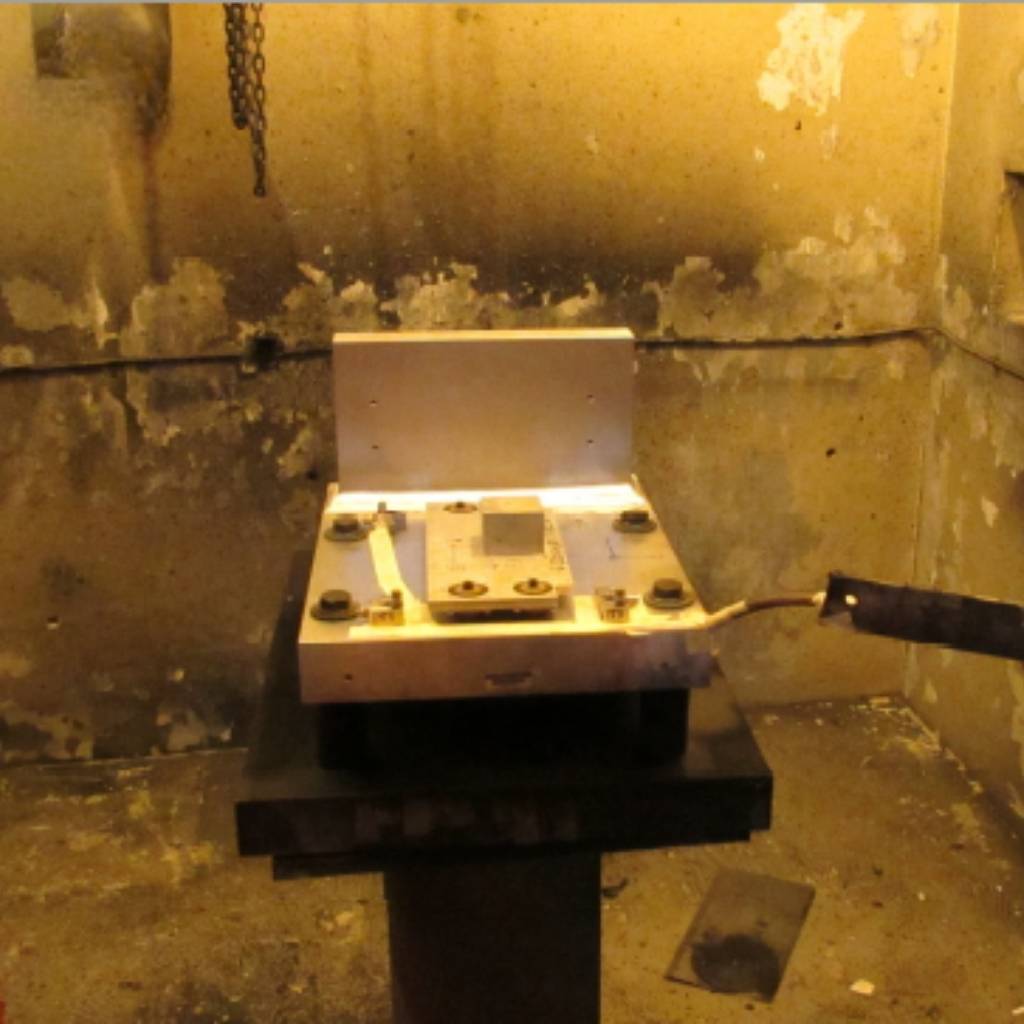
- Shock: Transient events with high peak accelerations (e.g., 500–30,000g over 0.1–10 ms), such as pyroshock from stage separation or handling drops. Common waveforms include half-sine and sawtooth pulses; testing per MIL-STD-883 Method 2002 verifies resistance to solder joint fractures or die cracks.
- Vibration: Cyclic oscillations (5–2000 Hz, up to 50g RMS), inducing fatigue in wire bonds or resonances in assemblies. Profiles include sine sweeps, random vibration, and sine-on-random, revealing amplification factors and endurance limits.
These tests measure acceleration, velocity, and displacement to characterize fragility and guide mitigation strategies like damping or isolation.
Have Questions?
Submit the contact form below and one of our electrical testing experts will connect with you right away.
Applications in Space and High-Reliability Systems
In space systems, components face broadband vibrations during launch (e.g., 20g RMS random) and micro-vibrations in orbit, potentially causing signal degradation or mechanical loosening. Defense applications involve gunfire shocks or terrain-induced vibes, where failures can compromise functionality.
Testing addresses:
- Launch dynamics: Acoustic levels to 140 dB and axial vibrations.
- Operational loads: Reaction wheel jitter or payload deployment impulses.
- Handling: Transit drops and seismic simulations.
Data from these evaluations support risk assessment and hardening, reducing in-service anomalies.
Key Standards and Methods
Standards provide standardized procedures for reproducibility:
| Standard | Scope | Principal Methods | High-Rel Applications |
|---|---|---|---|
| MIL-STD-810 (514/516) | Environmental engineering | Random/sine vibration to 50g RMS; shocks to 75g | Satellite qualification; pyroshock tailoring. |
| IEC 60068-2-6/27/64 | Environmental robustness | Vibration 5–500 Hz at 1–5g; shocks 15–100g | COTS up-screening for orbital use. |
| MIL-STD-883 Method 2002 | Microcircuit shock | 500–30,000g pulses (Conditions A–G) | EEE part integrity under handling. |
| MIL-STD-202 (213/205) | Component testing | Functional shock to 200g; vibration to 2000 Hz | Relays and capacitors in avionics. |
| RTCA DO-160 (7/8) | Avionics | Engine vibe simulations; crash shocks | Aircraft and spacecraft electronics. |
| NASA SP-5100 | Aerospace survey | Spectral analysis; isolation techniques | Historical basis for damping in launches. |
These standards align military severity levels with international norms, enabling tailored vibration and shock profiles across different mission types.
Testing Process Overview
The process follows a structured sequence:
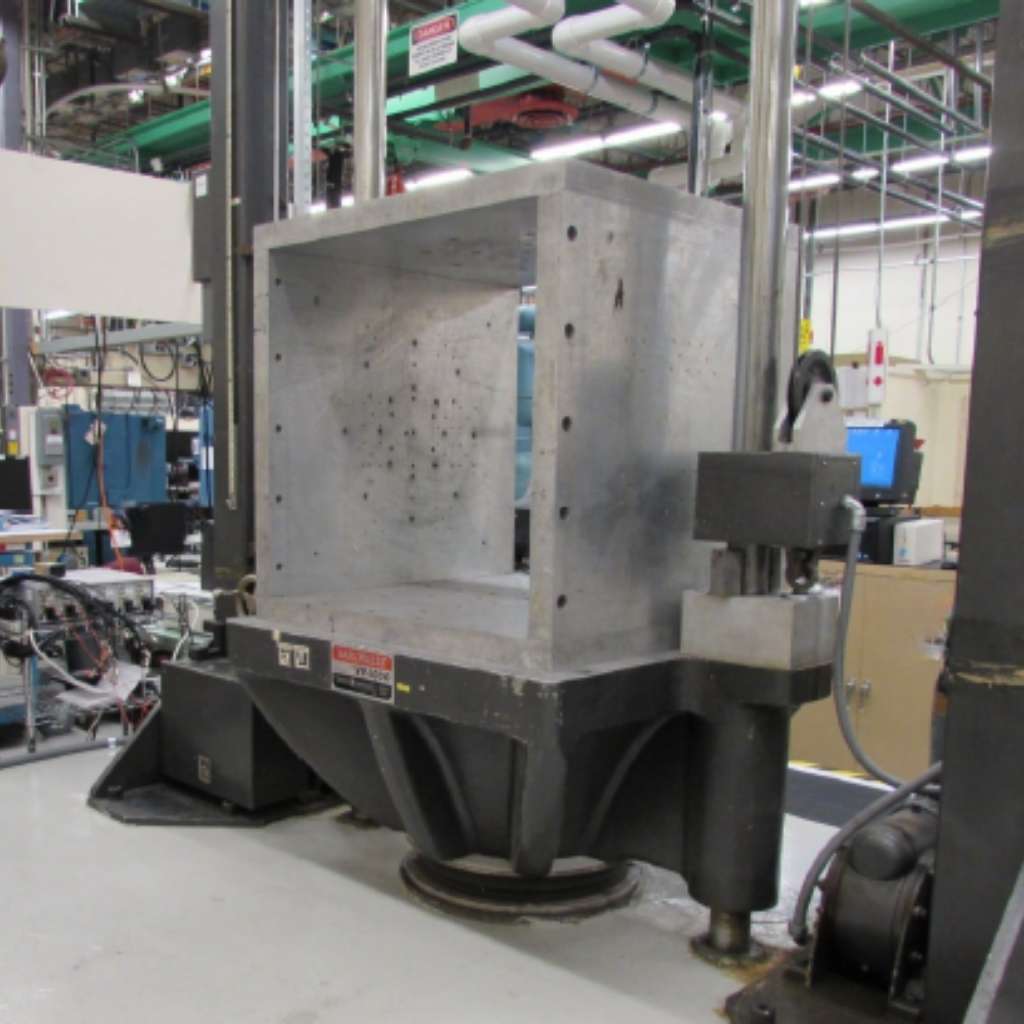
- Setup: Fixture UUT on electrodynamic shakers with accelerometers (up to 128 channels); calibrate for 6-axis exposure.
- Profile Selection: Define inputs (e.g., SRS for shocks >5,000g; random to 175g RMS) based on mission spectra.
- Execution: Apply loads incrementally; monitor resonances and transients (e.g., 3″ stroke shakers for high-velocity shocks).
- Evaluation: Post-test inspection via X-ray or functional checks; analyze spectra for peaks and damage.
- Documentation: Report waveforms, responses, and recommendations, often under ISO 17025 accreditation.
Combined environments (e.g., -67°C to 170°C) enhance realism.
Benefits for Design and Qualification
Shock and vibration testing delivers multiple benefits:
- Failure Prediction: Identifies modes like bond wire fatigue, enabling preemptive redesign.
- Compliance Efficiency: Accelerates certification for New Space or legacy upgrades.
- Performance Optimization: Reduces mass via targeted isolators; extends life by 2–5x.
Cost Control: Mitigates rework from anomalies, as seen in historical satellite incidents.
These outcomes support scalable, reliable systems.
Shock & Vibration in AAA’s Hi-Rel & Space Qualification Program
Shock & Vibration Testing complements AAA’s thermal, radiation, and physical analysis services by validating mechanical survivability under launch, transport, and operational loads. When combined with TVAC, RadHard, and DPA, it helps ensure that EEE components and assemblies can withstand both environmental and structural stressors throughout their mission profiles.
Why Customers Choose AAA Engineering
- American Owned: We are 100% American owned, and operated by veterans of the US Air Force, US Army, US Marines, and US Navy.
- Proven Expertise: 15+ years of upscreening and component data.
- Technical Authority: Skilled in MIL-STD, NASA, and AS6171 standards.
- Certified Excellence: DLA-Approved Test Laboratory, ISO/IEC 17025, AS6081, AS6171, ISO 9001/AS9100, ANSI/ESD S20.20, ITAR-registered.
- Trusted Results: Transparent, traceable data logs for reliability.
- Scalable Solutions: Supports prototype to production volumes.
Ready to Schedule Shock & Vibration Testing for Your Program?
Certifications