MIL-STD-750: The DoD Standard for Discrete Semiconductor Reliability
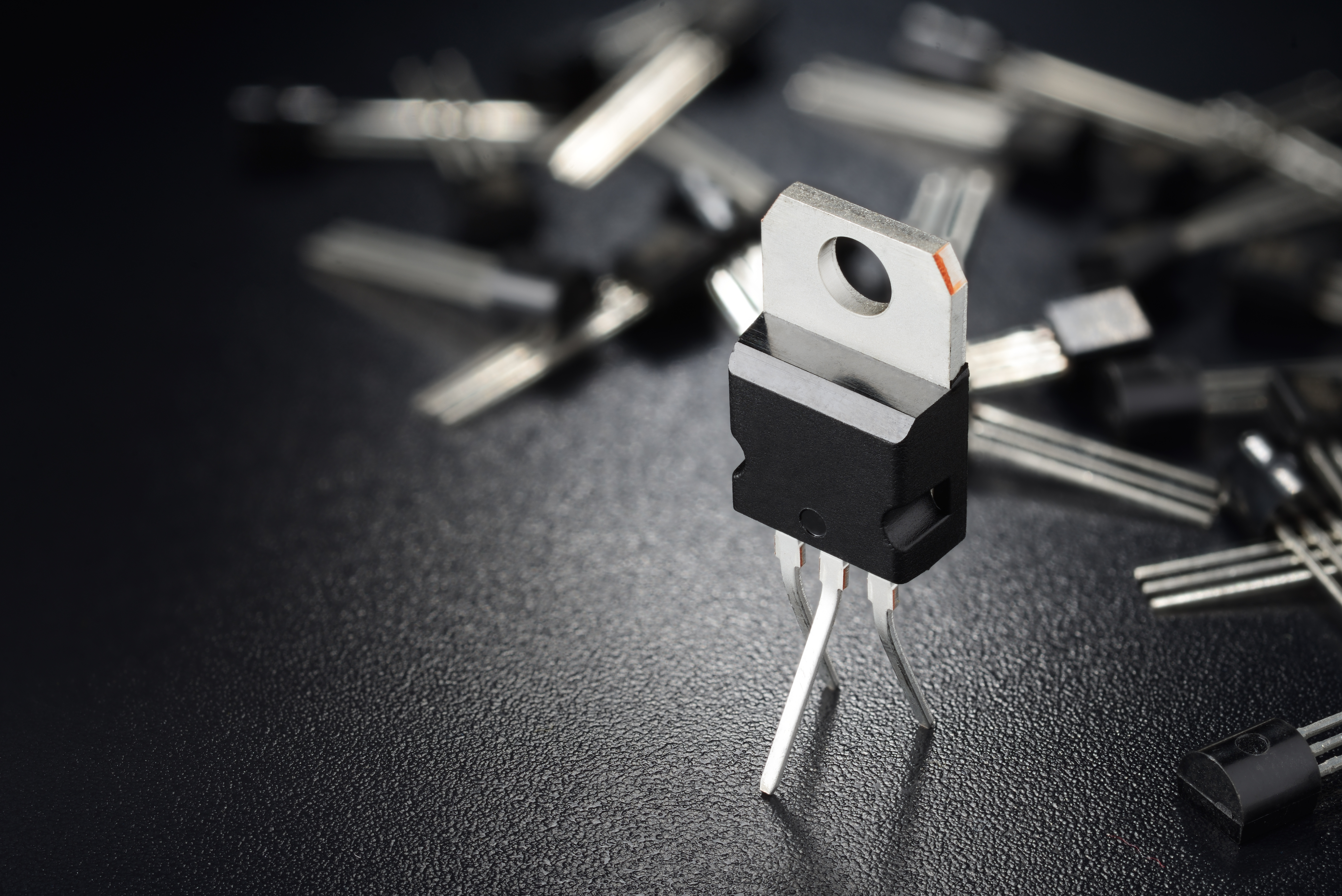
The Governing Standard for Discrete Semiconductor Reliability in High-Reliability Systems
At AAA Engineering & Test Lab, MIL-STD-750 serves as the Department of Defense standard governing the reliability evaluation of discrete semiconductor devices used in aerospace, defense, avionics, power systems, and space applications where component failure directly impacts mission success. This standard defines a comprehensive framework for evaluating electrical performance, thermal behavior, mechanical integrity, and environmental survivability of discrete devices through structured stress testing intended to expose failure mechanisms unique to discrete semiconductor technologies.
Our ISO/IEC 17025-accredited, AS6081/AS6171-certified engineers bring deep practical understanding of MIL-STD-750 test intent, discrete semiconductor failure modes, and real-world application, allowing test results to be interpreted in the context of mission-relevant reliability risks.
This page explains the structure, intent, and practical application boundaries of MIL-STD-750. AAA Engineering & Test Lab executes test plans to customer-defined MIL-STD-750 requirements, supporting qualification, screening, and failure analysis programs through ISO/IEC 17025-accredited testing.
Why MIL-STD-750 Remains Critical
Discrete semiconductors experience failure mechanisms that differ fundamentally from those found in integrated circuits. Electrical overstress, thermal runaway, junction degradation, package-to-die stress, and mechanical weaknesses can remain undetected during basic electrical screening yet lead to catastrophic in-service failures.
MIL-STD-750 was developed to force these failure mechanisms to surface through controlled electrical, thermal, mechanical, and environmental stresses. The standard provides test methods specifically intended to evaluate discrete device robustness under conditions that approximate real-world operating and abuse scenarios encountered in high-reliability systems.
Importantly, MIL-STD-750 does not guarantee lifetime performance. Instead, it provides data used by experienced engineers to assess reliability risk, validate device construction and behavior, and make informed program decisions for applications where failure is not acceptable.
Have Questions?
Submit the contact form below and one of our electrical testing experts will connect with you right away.
MIL-STD-750: What It Governs, and What It Does Not
What MIL-STD-750 Governs
MIL-STD-750 governs the reliability evaluation of discrete semiconductor devices through standardized electrical, thermal, mechanical, and environmental test methods. The standard is intended to identify failure mechanisms unique to discrete devices, including electrical overstress, thermal degradation, junction instability, and mechanical weaknesses.
MIL-STD-750 test methods generate data used to assess discrete device behavior under conditions representative of high-reliability operating environments encountered in aerospace, defense, power, and space systems.
What MIL-STD-750 Does Not Govern
MIL-STD-750 does not guarantee long-term field performance, system-level reliability, or correct application of a device within a specific design. The standard does not replace system integration testing, circuit-level analysis, or mission-specific reliability modeling.
Application of MIL-STD-750 requires engineering judgment to interpret test results relative to device function, stress exposure, and mission risk. The standard defines methods and criteria for discrete semiconductor evaluation; it does not independently determine suitability for a given program or platform.
Scope and Structure of the Current MIL-STD-750 Standard
The current MIL-STD-750 series (base Revision F, with methods updated through 2025) is organized into modular method groups designed to address specific discrete semiconductor behaviors:
- Part 1 – Environmental Test Methods (1000–1999)
Methods addressing temperature exposure, humidity, thermal shock, and environmental survivability. - Part 2 – Mechanical Test Methods (2000–2999)
Methods evaluating mechanical robustness, vibration resistance, and physical integrity. - Part 3 – Transistor Electrical Test Methods (3000–3999)
Electrical characterization and stress testing focused on transistor performance and degradation mechanisms. - Part 4 – Diode Electrical Test Methods (4000–4999)
Methods specific to diode behavior, including forward/reverse characteristics and failure thresholds. - Part 5 – High-Reliability Space Application Test Methods (5000–5999)
Additional stresses intended for space and other extreme-reliability applications.
These methods are designed to expose construction, material, and performance weaknesses under controlled stress. MIL-STD-750 defines test methods and acceptance criteria; it does not replace program-specific risk analysis or system-level reliability modeling.

How This Standard Is Applied Across Program Phases
MIL-STD-750 is applied throughout discrete semiconductor assessment programs, including:
- Initial qualification and characterization
- Lot acceptance and screening
- Upscreening of alternate or commercial sources
- Anomaly investigation and failure mechanism identification
Program teams apply MIL-STD-750 throughout the lifecycle of discrete semiconductor devices, including initial technology qualification, lot acceptance and screening, upscreening of alternate or commercial sources, and anomaly investigation.
Test method selection is driven by device type, electrical stress profile, thermal loading, mechanical environment, and mission risk tolerance. Different applications may emphasize different portions of the standard depending on operating conditions and failure consequences.
AAA Engineering & Test Lab supports these programs by executing customer-defined MIL-STD-750 test requirements and applying extensive experience in discrete semiconductor behavior to evaluate results, identify failure mechanisms, and document findings in clear, audit-ready reports.
Complementary Standards Commonly Used with MIL-STD-750
MIL-STD-750 is frequently used alongside related specifications to provide comprehensive electronic component assurance:
- MIL-STD-883 – Reliability and construction verification for microcircuits
- MIL-STD-202 – Environmental and mechanical testing for passive and electromechanical components
- MIL-STD-1580 – Destructive Physical Analysis (DPA) for internal construction verification
This coordinated use of standards ensures consistent reliability assessment across discrete devices, hybrids, and complex electronic assemblies.
Why Program Teams Trust AAA for MIL-STD-750 Programs
Effective MIL-STD-750 testing requires more than method execution. Program teams expect:
- Clear understanding of discrete semiconductor failure mechanisms
- Appropriate method selection aligned to mission risk
- Accurate interpretation of test results within real-world operating contexts
- Transparent documentation suitable for audits and design reviews
AAA Engineering & Test Lab delivers discrete semiconductor testing with the technical rigor, experience, and reporting discipline required to support high-reliability programs.
Certifications