Radiation Hardness Assurance (RadHard)
Have Questions?
Submit the contact form below and one of our electrical testing experts will connect with you right away.
Radiation Hardness (RadHard) Testing Services
Radiation hardness testing exists to confirm that electronic components and systems retain functionality in both natural space and man-made radiation environments. At AAA Engineering & Test Lab, we partner with our exclusive network to qualify FPGAs, ASICs, SoCs, and discretes for space, aerospace and defense.
Radiation Hardness Assurance (RadHard) is one of the four core pillars of AAA’s Hi-Rel & Space Qualification program, alongside TVAC, Shock & Vibration, and DPA.
Radiation-Hardened Electronics
Radiation-hardened electronics withstand ionizing radiation from sources like galactic cosmic rays and solar protons, preventing issues such as bit flips or parametric shifts. These include rad-hard FPGAs for reconfigurable processing, SOI CMOS ASICs for low-power logic, and SiGe-based mixed-signal ICs that operate down to cryogenic temperatures. We up-screen COTS devices using MIL-STD-883 and MIL-STD-750 methods, applying techniques like triple modular redundancy or error-correcting codes to match the demands of satellites, probes, and avionics, much like NASA’s RHESE efforts in hardening for lunar and Mars missions.
The Importance of Radiation Hardness Testing
In space, radiation can degrade electrical parametric performance, displace atoms in lattices, or trigger transients that cascade into system failures, as seen in historical upsets on missions like LRO. Testing quantifies these risks; total ionizing dose for cumulative effects and single-event effects for sudden destructive or non-destructive disruptions. Test data analysis enables the designer to implement mitigations that align with JEDEC, DLA and NASA RHA guidelines. Our approach, rooted in system-level verification, supports risk acceptance for small satellites while ensuring high-reliability for crewed programs, providing the data needed to predict on-orbit rates and mean-time-between-failure.
How Radiation Hardness Testing Works
We use a multi-tiered process: first, model the mission environment with tools like CREME-MC to define threats; then, irradiate samples with protons, neutrons, and/or heavy ions at partner accelerators; finally, analyze pre- and post-exposure data for shifts in thresholds or single-event-effect cross-sections. This includes baseline COTS testing to iterate designs, scaling results to orbit fluences per ASTM F1190. Our 13,000 sq ft lab handles preparation in ESD-controlled spaces, with network access for high-fluence runs, ensuring compliance across TID, DDD, and SEE while incorporating low-temperature extremes for deep-space quals.
Types of Radiation Effects
Total Ionizing Dose (TID) Effects
TID accumulates charge in oxides, shifting transistor parameters and increasing leakage—critical for long missions, where modern nodes tolerate up to 1 Mrad(Si) with proper annealing.
Displacement Damage Dose (DDD) Effects
Neutrons or protons knock atoms from crystal sites, degrading carrier mobility in bipolars or solar cells; normalized to 1 MeV equivalent fluence using NIEL calculations.
Single-Event Effects (SEE)
Ions deposit energy in sensitive volumes, causing SEUs in memory, SETs in linear devices, or SEBs/SELs that destroy devices. Threshold LETs can vary but are often >60 MeV·cm²/mg for hardened parts.
Enhanced Low Dose Rate Sensitivity (ELDRS)
Low-dose-rate bias exacerbates bipolar rebound, amplifying gain degradation; tested at rates mimicking LEO, MEO or GEO orbits.
Assessments follow EIA/JESD57, ESCC 22900, and updated models beyond CREME96 for accurate event forecasting.
Radiation Analysis Capabilities
Our analyses guide hardening from concept to flight, emphasizing rad-hard by design, materials, and software:
- Natural Space Radiation Environment Definition – Integrates GCR, SPE, and trapped belts to estimate mission doses, using Space Radiation or CRÈME-96 for transport in shielding configs.
- Hostile Environment Definition – Models man-made threats like nuclear EMP for defense avionics.
- Energy Deposition, Transport, and Shielding Analyses – Simulates particle paths with NOVICE, SHIELDOSE, or FastRad to optimize attenuators.
- System Assessment & Hardening Approach Definition – Reviews SoCs for vulnerabilities (TMR, scrubbing, etc.).
- Circuit Hardening & Error Mitigation – RHBD techniques, ECC, guard-rings, SEL suppression, etc.
This supports high-performance reconfigurable processors and aligns with MIL-STD-750 for endurance in extreme temperatures.
Radiation Test Capabilities
We evaluate the radiation spectrum, from cumulative doses to pulsed transients, scaling for lot acceptance or prototype validation:
- Total Ionizing Dose (TID) – 300 krad(Si)+
- Prompt Ionization / Dose Rate – 10¹¹ rad(Si)/s
- Displacement Damage Dose (DDD) – 1E7 n/cm²/s+
- Single-Event Effects (SEE) – LET > 80 MeV·cm²/mg
- ELDRS – 0.01 rad(Si)/s per MIL-STD-883 Method 1019
Accelerator access replicates application circuits, with real-time monitoring for energized boards.
Radiation Dose Analysis and Test Capabilities
We prioritize predictive modeling, transport sims, and mitigations for TID, dose rate, DDD, SEE and combined effects, hardened by materials (e.g., SOI), design (e.g., ViArray), and software (e.g., scrubbing). Partner networks handle execution, with DLA reporting for assurance. NOVICE, CEPXS, and CREME-MC enable MTBF predictions, from die lots to avionics boxes.
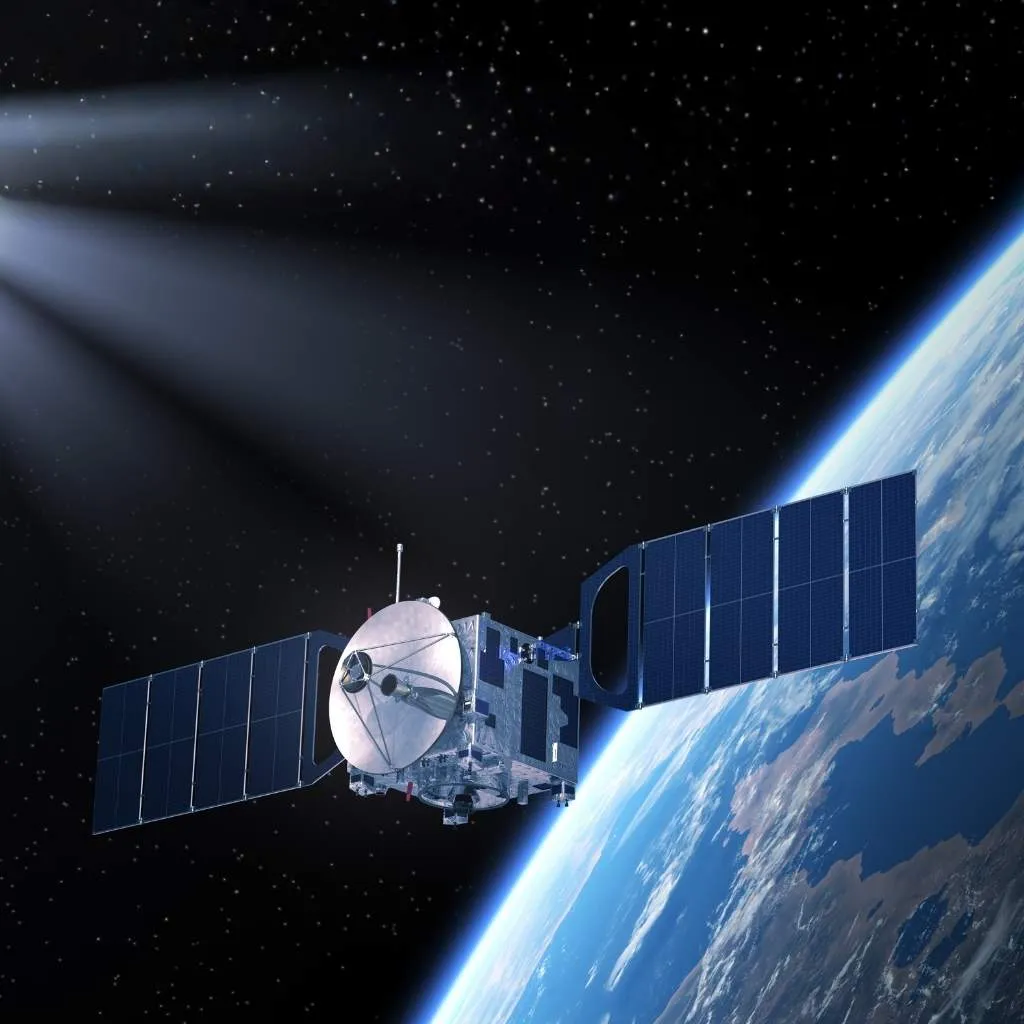
RadHard Equipment & Facilities
| Equipment/Facility | Dose Rates/Flux Capabilities | Key Features |
|---|---|---|
| Flash X-Ray Systems (FX-25 & PulseRad 430) | 1E6 to 2E11 rad(Si)/s | 20 ns pulses for prompt/EMP; bremsstrahlung mimics man-made weapon prompt radiation |
| Cobalt-60 Irradiators (JL Shepherd 484B & 484CR) | 0.001 to 300 rad(Si)/s | NIST dosimetry; chambers for PCBs/hybrids |
| Room Irradiator (Hopewell Designs Co-60) | 0.001 to 0.1 rad(Si)/s | 28-part batches; ELDRS low-rate; multi-device for lot screening |
| Neutron Generator (Adelphi DT-110) | >1E10 n/s yield; 14 MeV | Flux >1E7 n/cm²/s; DDD/SEE via fast neutrons, per ASTM E265 |
| Pulsers & Component Lab | Pin transients | Activated handling; parametric sweeps for SEB/SEL |
NOVICE, CEPXS, and CREME-MC enable MTBF predictions, from die lots to avionics boxes.
Radiation Testing Services
We streamline quals for trusted microelectronics and high-density storage:
- Strategic Partner Network Access – Heavy-ion at TAMU/Berkeley, protons at Mayo/Mass General, neutrons at MNRC-like sources.
- Full-Service Radiation Testing – Samples in — fixtures, MIL-STD-883/1019 execution, root-cause-driven reporting.
- Facility Usage – Daily irradiator access for production or engineering runs.
- Proposals in < 1 week – Leveraging DMEA-accredited flows.
RadHard in AAA’s Hi-Rel & Space Qualification Program
RadHard integrates with AAA’s broader Hi-Rel testing ecosystem, complementing TVAC, Shock & Vibration, and DPA to reduce mission-level radiation risk and support end-to-end qualification paths.
What We Need to Quote and Schedule RadHard Testing
To scope a radiation hardness test plan and confirm schedule and reporting needs, please provide:
- Device type, technology, and package configuration
- Intended mission and radiation environment (if defined)
- Radiation effects of interest (TID, SEE, displacement damage)
- Target levels or objectives (dose, LET, fluence), if specified
- Quantity of devices and any lot/date code constraints
- Operating modes and functional monitoring requirements
- Schedule constraints and documentation requirements
What You Receive
AAA delivers a controlled RadHard testing data package aligned to program needs, including:
- Documented test plan and configuration summary
- Test results and reporting aligned to the defined objectives
- Run documentation and configuration records
- Observations and clearly documented exceptions or deviations
- Final report package suitable for engineering and quality review
Why Customers Choose AAA Engineering
- American Owned: We are 100% American owned, and operated by veterans of the US Air Force, US Army, US Marines, and US Navy.
- Proven Expertise: 15+ years of upscreening and component data.
- Technical Authority: Skilled in MIL-STD, NASA, and AS6171 standards.
- Certified Excellence: DLA-Approved Test Laboratory, ISO/IEC 17025, AS6081, AS6171, ISO 9001/AS9100, ANSI/ESD S20.20, ITAR-registered.
- Trusted Results: Transparent, traceable data logs for reliability.
- Scalable Solutions: Supports prototype to production volumes.
Certifications