
MIL-STD-1580: Destructive Physical Analysis for High-Reliability Electronics
Table of Contents
MIL-STD-1580: Destructive Physical Analysis for EEE Parts
MIL-STD-1580 establishes general and part-family requirements for destructive physical analysis of electronic, electromagnetic, and electromechanical parts. The standard uses destructive examination of samples from a production lot to evaluate internal design, materials, construction, workmanship, prohibited-material conditions, and other attributes that may affect lot acceptance or require additional engineering review.
The current source is MIL-STD-1580D with Change 1, dated 25 November 2025. It combines common DPA controls with detailed requirements for prohibited-material analysis and fifteen part families, from capacitors and connectors to microcircuits, semiconductor devices, relays, switches, fuses, and heaters.
MIL-STD-1580 is not one generic decapsulation flow. The applicable part family, production-lot definition, sample criteria, product specification, drawing, baseline configuration, acquisition document, DPA procedure, destructive sequence, evaluation criteria, and disposition authority determine what must be done and what the findings mean.
Review MIL-STD-1580 DPA Requirements
MIL-STD-1580 DPA Available from AAA
AAA Engineering & Test Lab executes customer-defined destructive physical analysis programs based on MIL-STD-1580 and applicable component requirements within its confirmed capability scope. When the program invokes an exact MIL-STD-883, MIL-STD-750, or MIL-STD-202 method on AAA’s issued DLA suitability listing, that method-level suitability may be stated separately.
AAA performs DPA programs involving:
- Requirement review, production-lot definition, sample allocation, and part-family flow selection
- Baseline documentation and external visual examination
- Prohibited-material analysis using approved XRF or SEM-EDS approaches where applicable and confirmed
- Radiography and other nondestructive evidence collection before destructive preparation
- Controlled delidding, decapsulation, disassembly, sectioning, polishing, and sample preparation
- Internal visual, bond, die-attach, termination, interface, material, construction, and workmanship evaluation
- Applicable DLA-suitable MIL-STD-883, MIL-STD-750, and MIL-STD-202 methods
- Images, measurements, findings, evaluation criteria, deviations, retained residues, and a final report as defined by the approved scope
MIL-STD-1580 owns the DPA framework. The DPA pillar page explains the broader commercial service, risk planning, lifecycle use, laboratory selection, capabilities, and RFQ pathway without duplicating this standard-specific authority page.
Scope and Applicability
MIL-STD-1580 describes the performance of DPA on samples of parts and provides general criteria for interpreting results in relation to associated production lots. It addresses electronic, electromagnetic, and electromechanical part families including:
- Capacitors
- Connectors
- Quartz crystals
- Diodes
- Feed-through filters
- Magnetic devices, including inductors, transformers, and coils
- Microcircuits, including monolithic, hybrid, optocoupler, and multichip-module constructions
- Relays
- Resistors
- Switches
- Thermistors
- Transistors
- Selected RF devices
- Fuses
- Flexible heaters
The standard was developed for stringent high-quality part assurance associated with space and launch-vehicle applications, but the controlling contract or customer plan determines whether it applies to a specific program. The DPA flow must be tailored to the actual component construction and governing requirement.
What MIL-STD-1580 Governs - and What It Does Not
MIL-STD-1580 governs the DPA framework, including:
- Production-lot and sample considerations
- General DPA procedure and baseline-sketch requirements
- Unique DPA identification and data records
- Selection of applicable test and inspection methods
- Evaluation criteria tied to the part specification, drawing, or baseline documentation
- External visual, radiography, disassembly, delidding, sectioning, SEM sample preparation, imagery, residue, and sample controls
- Prohibited-material analysis and detailed part-family requirements
- Documentation of rejectable defects, significant observations, and lot-related findings for the responsible authority
MIL-STD-1580 does not independently:
- Establish one universal DPA sequence or sample size for every part
- Replace the component specification, drawing, acquisition document, or customer-approved DPA procedure
- Make every observation a rejectable defect
- Prove that an entire production lot is defect-free or reliable
- Prove provenance, authenticity, or counterfeit intent
- Replace electrical qualification, environmental testing, radiation assurance, failure analysis, or system-level evaluation
- Grant product qualification, QPL, QML, JAN, or space-grade status
AAA documents the sampled parts and applies the approved evaluation basis. The procuring activity or responsible program authority determines lot acceptance, rejection, additional sampling, screening, corrective action, or other disposition.
Have Questions?
Submit the contact form below and one of our electrical testing experts will connect with you right away.
The Current MIL-STD-1580 Document Architecture
MIL-STD-1580D with Change 1 is organized in two layers.
The base standard defines scope, applicable documents, terminology, production-lot and sample requirements, DPA procedures, baseline documentation, data records, test and inspection method selection, evaluation criteria, radiography, destructive preparation, imagery, residue control, and general implementation notes.
Requirements 9 through 24 provide detailed procedures and criteria for prohibited-material analysis and specific part families. These requirements supplement the common controls in the base standard and identify component-specific preparation, examination, measurement, imagery, and data expectations.
MIL-STD-1580 may invoke methods from MIL-STD-202, MIL-STD-750, and MIL-STD-883 when those method families match the part. It also relies on the applicable part specification or drawing for configuration and evaluation criteria. The standard therefore functions as an organizing DPA authority, not a self-contained substitute for every component requirement it references.
DPA Requirements and Referenced Test Methods Within MIL-STD-1580
Requirement 9 – Prohibited Materials Analysis
Requirement 9 defines prohibited-material analysis of external and internal finishes and package materials. It includes X-ray fluorescence and SEM-EDS approaches for specified material-composition questions. Spatial resolution, calibration, standards, geometry, surface condition, plating thickness, and sampling affect interpretation.
The result addresses the specified material question. It does not establish full part identity, provenance, or authenticity.
Requirements 10 Through 15 – Passive, Interconnect, Crystal, Diode, Filter, and Magnetic Parts
- Requirement 10 – Capacitors. Covers detailed DPA requirements for multiple capacitor constructions, including external examination, material analysis, terminal or element evaluation, decapsulation, sectioning, and microscopic examination as applicable.
- Requirement 11 – Connectors. Addresses connector construction, contacts, inserts, shells, finishes, terminations, sectioning, and other defined attributes.
- Requirement 12 – Quartz Crystals. Addresses applicable package, resonator, mount, bond, contamination, and construction evidence.
- Requirement 13 – Diodes. Connects diode DPA to the applicable semiconductor construction and MIL-STD-750 methods or product requirements.
- Requirement 14 – Feed-Through Filters. Addresses construction, interfaces, dielectric, attachment, and applicable sectioning or examination.
- Requirement 15 – Magnetic Devices. Addresses inductors, transformers, coils, windings, insulation, terminations, cores, impregnation, and construction evidence.
Requirements 16 Through 21 – Microcircuits, Relays, Resistors, Switches, Thermistors, and Transistors
Requirement 16 – Microcircuits. Addresses monolithic, hybrid, optocoupler, and multichip-module constructions and may invoke applicable MIL-STD-883 visual, radiographic, bond, die-attach, metallization, glassivation, and related methods.
- Requirement 17 – Relays. Addresses contacts, coils, welds, attachments, contamination, sealing, mechanical construction, and other defined attributes.
- Requirement 18 – Resistors. Addresses applicable film, element, termination, substrate, coating, package, and construction features.
- Requirement 19 – Switches. Addresses contacts, actuators, terminals, internal attachments, materials, and construction evidence.
- Requirement 20 – Thermistors. Addresses thermistor elements, contacts, terminations, coatings, packages, and applicable sectioning.
- Requirement 21 – Transistors. Connects transistor DPA to applicable discrete-semiconductor construction, product requirements, and MIL-STD-750 methods.
Requirements 22 Through 24 – Selected RF Devices, Fuses, and Heaters
- Requirement 22 – Selected RF Devices. Addresses defined RF constructions and the applicable internal, material, attachment, and dimensional evidence.
- Requirement 23 – Fuses. Addresses fuse-element, terminal, substrate, attachment, package, and construction attributes.
- Requirement 24 – Heaters. Addresses flexible-heater construction, electrical checks, terminal strength, prohibited-material analysis, sectioning, lead attachment, delamination, and other defined conditions.
Referenced MIL-STD Test Methods
When the part specification or drawing does not provide the required test or inspection method, MIL-STD-1580 directs selection from or based on MIL-STD-202, MIL-STD-750, or MIL-STD-883 where applicable.
AAA’s DLA-suitable methods relevant to DPA include:
- MIL-STD-883 TM 2009 External Visual
- MIL-STD-883 TM 2010 Internal Visual (Monolithic)
- MIL-STD-883 TM 2011 Bond Strength
- MIL-STD-883 TM 2012 Radiography
- MIL-STD-883 TM 2018 SEM Inspection of Metallization
- MIL-STD-883 TM 2019 Die Shear Strength
- MIL-STD-883 TM 2021 Glassivation Layer Integrity
- MIL-STD-750 TM 2101 Destructive Physical Analysis for Diodes
- MIL-STD-750 TM 2071 External Visual and Mechanical Examination
- MIL-STD-750 TM 2076 Radiography
The applicable part family and controlling document determine which method belongs in the DPA flow. Similar method names do not make microcircuit, discrete-semiconductor, and passive-component criteria interchangeable.
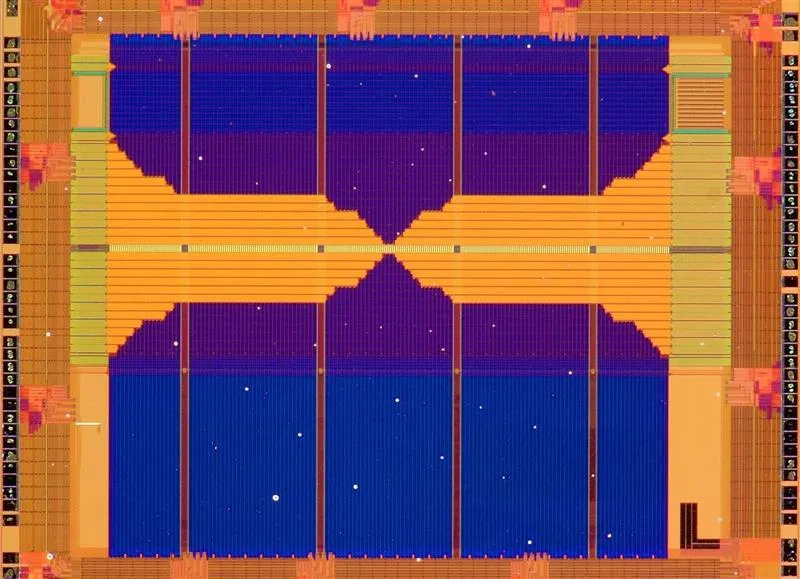
Core Requirements and DPA Program Structure
A defensible MIL-STD-1580 DPA program generally connects:
- Lot and sample definition. The production lot, random selection, sample quantity, parallel samples, lot-conformance purpose, and disposition rules are defined before destructive work begins.
- Baseline configuration. The applicable specification, drawing, part number, materials, dimensions, package, construction, and expected internal configuration establish the comparison basis.
- Approved DPA procedure. The flow allocates samples, sequences nondestructive and destructive work, identifies referenced methods, defines preparation, and controls deviations.
- As-received and nondestructive documentation. Markings, external condition, baseline imagery, radiography, and other nondestructive evidence are recorded before opening or sectioning can alter the sample.
- Controlled destructive preparation. Delidding, decapsulation, disassembly, mounting, sectioning, polishing, etching, and SEM preparation must preserve the intended feature and distinguish preparation artifacts from original conditions.
- Part-family examination. The applicable Requirement 9 through 24 flow supplies construction-specific measurements, observations, imagery, and evaluation criteria.
- Data, reporting, and residue control. Each DPA receives a unique identifier; data pages, images, measurements, defects, significant observations, deviations, and retained samples or residues are traceable to the examined item.
The sequence matters. Destructive access can erase evidence that should have been documented earlier.

How MIL-STD-1580 Applies Across the Program Lifecycle
- Source and supplier evaluation. DPA can compare construction and workmanship evidence for a new source, alternate source, or source with limited history.
- Qualification and product evaluation. A customer-defined program can use part-family DPA to assess construction against the approved specification, drawing, or baseline.
- Lot acceptance and conformance. Randomly selected samples can support production-lot decisions when the sample plan, defect criteria, and disposition authority are defined.
- Production monitoring and change control. Repeated DPA can reveal construction, material, process, or workmanship changes that warrant supplier or program review.
- PEM assurance. DPA can provide internal construction and workmanship evidence within a mission-specific PEM qualification or screening plan.
- Anomaly escalation. A DPA finding can trigger additional sampling, targeted screening, failure analysis, supplier corrective action, or disposition review.
DPA is destructive sample evidence. The responsible authority must decide how much confidence the sample provides for the lot and what additional controls are required.
What the Controlling Document Must Specify
An executable MIL-STD-1580 DPA request should identify:
- Standard revision and applicable Requirement 9 through 24 part-family flow
- Part number, manufacturer, device or component family, package, construction, datasheet, drawing, specification, and expected baseline configuration
- Production-lot definition, lot and date-code identity, traceability, source history, and procurement context
- Sample quantity, random-selection basis, subgroup allocation, parallel samples, known-good references, and destructive authorization
- Applicable MIL-STD-202, MIL-STD-750, MIL-STD-883, MIL-PRF, or customer methods and conditions
- Required sequence of external visual, material analysis, radiography, electrical checks, disassembly, delidding, decapsulation, sectioning, microscopy, mechanical tests, and materials analysis
- Evaluation criteria, rejectable defects, significant-observation rules, higher-magnification handling, additional sampling, screening, retest, and lot disposition
- Image, measurement, data, report, residue, sample-retention, witness, schedule, and secure-file-exchange requirements
AAA can help translate the submitted requirement into an executable DPA flow. The customer or procuring activity controls product acceptance and lot disposition.
Common Misapplications and Interpretation Errors
Treating MIL-STD-1580 as One Universal DPA Flow
The standard contains different requirements for capacitors, connectors, microcircuits, semiconductors, magnetic devices, relays, resistors, switches, fuses, heaters, and other part families. A generic decapsulation checklist cannot replace the applicable flow.
Using a Fixed Sample Size Without the Controlling Context
Sample requirements depend on the standard, lot-conformance purpose, part family, contract, product specification, and approved DPA procedure. A competitor’s generic “three to five parts” rule is not a defensible universal requirement.
Confusing MIL-STD-1580 DPA with AS6171/4 Physical Analysis
MIL-STD-1580 evaluates part construction and lot quality under a DPA framework. AS6171/4 supports suspect or counterfeit EEE-part physical analysis. Techniques may overlap, but the risk question, sampling, criteria, comparison basis, and disposition are different.
Confusing DPA with Failure Analysis
DPA evaluates sampled parts against a defined construction and workmanship framework. Failure analysis begins with a failure or anomaly and uses a hypothesis-driven sequence to localize the site, characterize the mechanism, and assess cause. A DPA finding may trigger failure analysis, but the programs are not interchangeable.
Treating Every Observation as a Rejectable Defect
MIL-STD-1580 requires evaluation criteria tied to the part specification, drawing, baseline documentation, or approved procedure. Higher-magnification observations may be useful for review without automatically constituting a failure to the procurement requirement.
Failing to Separate Preparation Artifacts from Original Conditions
Decapsulation, delidding, sectioning, polishing, etching, cleaning, and probing can create cracks, smear, contamination, separation, or material loss. The procedure and report must identify preparation history and artifact risk.
Extending Sample Findings to the Entire Lot Without Qualification
DPA examines selected samples. Lot conclusions depend on the sampling plan, defect type, production-lot definition, criteria, and responsible authority. One sample finding does not create unlimited population certainty.
When MIL-STD-1580 Alone Is Not Sufficient
- Applicable MIL-PRF, detail specifications, drawings, and product requirements are needed to define part configuration, qualification, construction, acceptance, and lot criteria.
- MIL-STD-883, MIL-STD-750, and MIL-STD-202 supply part-family test and inspection methods when invoked by the DPA flow.
- AS6171A and applicable slash sheets are needed when the primary decision concerns suspect or counterfeit EEE-part risk. DPA can contribute construction evidence but does not prove provenance.
- Failure Analysis and Anomaly Investigation is needed when a specific failure must be confirmed, localized, characterized, and connected to causal evidence.
- Electrical, environmental, life, radiation, and mechanical testing are needed when the decision requires functional performance, environmental endurance, lifetime behavior, radiation response, or assembly and system evidence.
- Supplier controls and traceability review are needed to address documentation, chain of custody, lot formation, process history, and source risk that destructive examination cannot reconstruct.
Relationship to AAA's DPA Testing
MIL-STD-1580 is owned by AAA’s Destructive Physical Analysis pillar. The authority page explains the governing standard, architecture, part-family requirements, referenced methods, limitations, and evidence controls. The DPA pillar explains how AAA scopes and executes DPA commercially across sourcing, qualification, lot acceptance, production monitoring, PEM assurance, and anomaly escalation.
The page also connects to MIL-STD-883, MIL-STD-750, and MIL-STD-202 authority and method pages; Failure Analysis and Anomaly Investigation; PEM Qualification and Screening; Radiography; Acoustic Microscopy; External and Internal Visual; Decapsulation; Cross-Section Analysis; SEM and EDS; XRF; Bond Strength; and other confirmed capabilities.
Related Standards and Key Comparisons
- MIL-STD-1580 versus MIL-STD-883. MIL-STD-1580 governs the broader DPA framework across many EEE part families. MIL-STD-883 supplies microcircuit methods and procedures that may be invoked within a microcircuit DPA.
- MIL-STD-1580 versus MIL-STD-750. MIL-STD-750 supplies discrete-semiconductor methods. MIL-STD-1580 controls how applicable methods are incorporated into a part-family DPA program.
- MIL-STD-1580 versus MIL-STD-202. MIL-STD-202 supplies methods for passive and electromechanical component parts. MIL-STD-1580 controls DPA sampling, sequence, interpretation, and reporting across those part families.
- MIL-STD-1580 versus AS6171/4. MIL-STD-1580 addresses DPA and lot-quality evidence. AS6171/4 addresses physical analysis for suspect or counterfeit EEE parts. Shared techniques do not make the acceptance basis equivalent.
- DPA versus Failure Analysis. DPA evaluates sampled construction and workmanship. Failure analysis investigates a defined failure or anomaly through evidence-led localization and mechanism analysis.
MIL-STD-1580 DPA Deliverables
AAA’s expected MIL-STD-1580 evidence package is defined by the approved DPA procedure, part-family requirement, product authority, and reporting scope. Depending on the work, deliverables may include:
- Unique DPA identifier, sample map, part and lot traceability, markings, and as-received documentation
- Governing revision, Requirement 9 through 24 flow, product specification, drawing, baseline, referenced methods, and approved deviations
- DPA procedure, sample allocation, sequence, equipment, preparation, and destructive-history record
- Baseline sketch and expected configuration
- External visual, radiographic, XRF, SEM-EDS, acoustic, internal visual, cross-section, bond, die-attach, termination, interface, and material images or data where included
- Measurements, failure modes, preparation artifacts, rejectable defects, significant observations, criteria references, and unresolved limitations
- Additional-sampling, screening, supplier, corrective-action, or investigation recommendations where within the approved scope
- Method- or standard-specific DLA-suitability statement where applicable to the quoted work
- Final DPA summary and report, serialized images, raw data, retained samples, residues, and disposition records as defined by the approved scope
The report connects each finding to the sampled part, preparation history, applicable criterion, and evidence. It does not claim more population certainty, authenticity, root-cause confidence, or mission assurance than the approved program supports.
Information Needed to Define an Applicable MIL-STD-1580 DPA
To define an executable quotation, provide:
- Part number, manufacturer, part family, package, construction, datasheet, drawing, specification, and expected baseline
- Lot and date-code information, production-lot definition, source and traceability history, quantity, and available comparison samples
- MIL-STD-1580 revision and applicable Requirement 9 through 24 flow
- Program purpose, such as lot acceptance, qualification support, source evaluation, production monitoring, PEM assurance, or anomaly escalation
- Sample quantity, selection method, allocation, destructive authorization, and retention constraints
- Required methods, sequence, preparation, imaging, measurements, criteria, and disposition rules
- Reporting, raw-data, image, witness, residue, retention, schedule, and secure-file-exchange requirements
Supporting specifications, drawings, baselines, test plans, and sensitive files are exchanged after engagement through an approved secure channel, not through a public website upload.
Submit a MIL-STD-1580 DPA RFQ
Certifications




MIL-STD-1580 Technical FAQs
Does AAA Engineering & Test Lab perform MIL-STD-1580 DPA?
Yes. AAA Engineering & Test Lab executes customer-defined DPA programs based on MIL-STD-1580 and applicable component requirements within its confirmed capability scope.
How does AAA support MIL-STD-1580 DPA?
AAA performs destructive physical analysis to MIL-STD-1580 requirements within confirmed scope. MIL-STD-1580 itself is not represented as a DLA laboratory-suitability credential. When a MIL-STD-1580 program invokes an exact MIL-STD-883, MIL-STD-750, or MIL-STD-202 method that is on AAA’s issued suitability listing, the exact method-level DLA status may be stated separately.
What is the current revision of MIL-STD-1580?
Does MIL-STD-1580 use one DPA procedure for every component?
No. The standard contains different detailed requirements for prohibited-material analysis and fifteen part families. The governing specification, drawing, baseline, and approved DPA procedure further control the flow.
How many samples are required for MIL-STD-1580 DPA?
There is no defensible universal answer without the controlling context. Sample quantity depends on the applicable requirement, part family, lot-conformance purpose, product specification, contract, and approved DPA plan.
Can MIL-STD-1580 DPA prove an entire lot is reliable?
No. DPA provides destructive evidence from selected samples. The production-lot definition, sampling basis, defect type, criteria, and responsible authority determine how findings affect the lot.
Can MIL-STD-1580 DPA identify counterfeit components?
DPA can reveal construction differences or anomalies that warrant further review. It does not prove provenance or authenticity. Suspect or counterfeit evaluation requires an AS6171-based risk plan, traceability, and appropriate comparison evidence.
Is MIL-STD-1580 DPA the same as failure analysis?
No. DPA evaluates sampled construction and workmanship against a defined plan. Failure analysis investigates a specific failure or anomaly to localize the site, characterize the mechanism, and evaluate causal evidence.
Why should radiography occur before destructive opening?
Radiography documents internal construction in the as-received state and can guide later destructive preparation. Opening, sectioning, or disassembly can move, damage, remove, or obscure evidence.
What happens when a DPA finds an anomaly?
The finding is documented against the approved criteria and provided to the responsible authority. The disposition may include additional review, expanded sampling, screening, supplier action, failure analysis, acceptance, or rejection as defined by the governing program.
What information does AAA need to quote MIL-STD-1580 DPA?
AAA needs the part and lot information, part family, applicable revision and requirement, product specification or drawing, sample plan, DPA purpose, required methods and sequence, evaluation criteria, destructive authorization, reporting and retention requirements, and schedule.