
MIL-STD-883: The DoD Standard for Microcircuit Reliability
Table of Contents

MIL-STD-883: Test Methods and Controls for High-Reliability Microcircuits
MIL-STD-883 establishes uniform test methods, controls, and procedures for evaluating the environmental, physical, mechanical, and electrical characteristics of microelectronic devices used in military and aerospace electronic systems.
The standard applies to microelectronic devices such as monolithic, hybrid, multichip, and film microcircuits, microcircuit arrays, and the elements from which those devices are formed. It provides a common technical framework for qualification, screening, quality conformance, workmanship evaluation, destructive physical analysis, failure investigation, and other high-reliability assurance activities.
MIL-STD-883 is not a single test or a universal screening package. It is a structured family of test methods and procedures that must be invoked through the correct method number, revision, condition, product specification, drawing, acquisition document, or approved customer flow.
Discuss MIL-STD-883 Testing Requirements
MIL-STD-883 Testing Available from AAA
AAA Engineering & Test Lab performs customer-defined MIL-STD-883 testing for high-reliability microcircuits, including environmental, burn-in, life, visual, mechanical, radiographic, screening, DPA, and physical-analysis methods. AAA has achieved DLA suitability for 15 specific MIL-STD-883 test methods within its approved scope.
- Stabilization bake, temperature cycling, steady-state life, and burn-in
- Solderability and lead-integrity testing
- External and internal visual inspection
- Radiographic inspection
- Bond-strength and die-shear testing
- SEM inspection of metallization
- Glassivation-layer-integrity evaluation
- Support for screening, qualification, quality conformance, DPA, failure analysis, and PEM assurance programs
- Method-specific reports, images, measurements, failure modes, deviations, and engineering summaries
What MIL-STD-883 Governs
MIL-STD-883 provides uniform laboratory methods and procedural controls for microcircuits. Its purpose is to produce reproducible device-level evidence under defined environmental, mechanical, physical, and electrical conditions.
The standard governs:
- Environmental test methods in the 1000 series
- Mechanical and physical test methods in the 2000 series
- Digital electrical test methods in the 3000 series
- Linear electrical test methods in the 4000 series
- Screening, qualification, quality conformance, wafer acceptance, failure analysis, DPA, and related procedures in the 5000 series
- General requirements for referencing methods, recording results, handling samples, controlling test conditions, and reporting deviations
What MIL-STD-883 Does Not Govern
MIL-STD-883 does not independently establish that a device is suitable for every military, aerospace, or space application. The standard supplies methods and controls; the applicable product specification, drawing, contract, program plan, or qualifying authority determines which methods apply and how the results are used.
- It does not guarantee field life or mission success. Laboratory stresses are intended to produce reproducible evidence, not to recreate every field or space environment exactly.
- It does not grant formal product status. A laboratory cannot grant QML, JAN, Class B, Class S, Class V, Class K, or similar status merely by performing selected methods.
- It does not replace MIL-PRF-38535 or MIL-PRF-38534. Those performance specifications govern manufacturer qualification, product classes, quality systems, and broader compliance frameworks.
- It does not make a deviated test flow fully compliant. Devices processed with deviations outside the allowed framework cannot be represented as fully compliant with MIL-STD-883.
- It does not replace mission-specific engineering. Radiation, duration, thermal, mechanical, source, traceability, and system risks still require program-level analysis.
The Current MIL-STD-883 Document Architecture
The current standard is MIL-STD-883L with Change 1, dated 27 June 2025. The series is divided into a base document and five method parts.
- MIL-STD-883L with Change 1. Defines scope, intended use, method numbering, reference rules, definitions, general requirements, test-result controls, sample disposition, orientation, test conditions, and precautions.
- MIL-STD-883-1. Contains environmental test methods 1000 through 1999.
- MIL-STD-883-2. Contains mechanical and physical test methods 2000 through 2999.
- MIL-STD-883-3. Contains digital electrical test methods 3000 through 3999.
- MIL-STD-883-4. Contains linear electrical test methods 4000 through 4999.
- MIL-STD-883-5. Contains procedures 5000 through 5999, including screening, qualification, quality conformance, failure analysis, DPA, wafer acceptance, and hybrid or multichip procedures.
This modular structure matters because the base standard and the invoked method part work together. A method cannot be interpreted correctly without the general requirements, referenced revision, condition, device specification, and procedural context.
How MIL-STD-883 Must Be Referenced
An executable MIL-STD-883 requirement should identify the method number, applicable revision, condition or test condition letter, sample quantity, sequence, product specification, drawing, and acceptance criteria where required.
A statement such as “test to MIL-STD-883” is incomplete. It does not identify which environmental, mechanical, physical, electrical, screening, qualification, or conformance requirements apply.
The base standard also distinguishes between full compliance and the use of individual methods for noncompliant non-JAN devices. When selected methods are used with approved deviations, the documentation must identify the actual method, condition, and deviation rather than representing the device as fully compliant with MIL-STD-883.
MIL-STD-883 Test Method Families
1000 Series: Environmental Tests
The 1000-series methods evaluate microcircuit response to environmental and endurance stresses. These methods include reduced pressure, moisture, corrosion, temperature cycling, thermal shock, seal, burn-in, steady-state life, internal gas analysis, radiation, and other environmental or operating conditions.
Method selection must account for device construction, package type, operating mode, qualification or screening purpose, product specification, and the failure mechanism being addressed.
2000 Series: Mechanical and Physical Tests
The 2000-series methods evaluate package, lead, interconnect, die-attach, marking, metallization, glassivation, construction, workmanship, solderability, vibration, mechanical shock, radiographic, and related physical attributes.
Many of the methods used in DPA and failure analysis come from this series. Nondestructive imaging and external examination should generally precede destructive opening or sectioning when the evidence sequence requires preservation of the as-received condition.
3000 Series: Digital Electrical Tests
The 3000-series methods define digital electrical measurements such as drive source, load conditions, delay, transition time, supply current, output voltage, input current, terminal capacitance, functional testing, ESD sensitivity classification, latch-up, leakage, clamp voltage, and package signal-integrity measurements.
These methods provide measurement frameworks. Device-specific limits, vectors, operating conditions, and acceptance criteria typically come from the applicable drawing, specification, or customer requirement.
4000 Series: Linear Electrical Tests
The 4000-series methods address linear microcircuit characteristics such as input offset, bias current, slew rate, phase margin, common-mode range, rejection ratios, open-loop performance, output performance, gain, and noise figure.
As with the digital series, the method defines how a parameter is measured; the controlling device requirement defines the required limit.
5000 Series: Screening, Qualification, Conformance, and Technical Procedures
The 5000-series procedures organize how multiple methods are applied within broader assurance programs.
- Method 5003. Failure analysis procedures for microcircuits.
- Method 5004. Screening procedures.
- Method 5005. Qualification and quality conformance procedures.
- Method 5007. Wafer lot acceptance.
- Method 5008. Test procedures for hybrid and multichip microcircuits.
- Method 5009. Destructive physical analysis.
- Method 5010. Test procedures for custom monolithic microcircuits.
- Method 5011. Evaluation and acceptance procedures for polymeric adhesives.
These procedures should not be reduced to a list of individual tests. They define program structure, sequence, sampling, acceptance, or process controls that must be read with the applicable product specification and device requirements.
Have Questions?
Submit the contact form below and one of our electrical testing experts will connect with you right away.
MIL-STD-883 Test Methods Available from AAA
AAA Engineering & Test Lab performs customer-defined MIL-STD-883 testing across environmental, burn-in, life, mechanical, visual, radiographic, and physical-analysis methods.
AAA has achieved DLA suitability for 15 of the methods listed below within its approved scope. TM 2030 Ultrasonic Inspection of Die Attach remains an active supported method without a DLA suitability claim.
Environmental, Burn-In, and Life Methods
- MIL-STD-883 TM 1004 – Moisture Resistance. Evaluates microcircuit resistance to moisture-related environmental exposure under the condition, cycle, preparation, measurements, and acceptance requirements invoked by the controlling document.
- MIL-STD-883 TM 1005 – Steady-State Life. Evaluates microcircuit behavior during sustained powered operation for the duration, temperature, bias, load, and endpoint measurements invoked by the controlling requirement.
- MIL-STD-883 TM 1008 – Stabilization Bake. Applies controlled unpowered elevated-temperature exposure for stabilization, preparation, high-temperature storage evaluation, or as a required step within a larger test flow.
- MIL-STD-883 TM 1010 – Temperature Cycling. Evaluates microcircuit response to repeated transitions between specified high- and low-temperature extremes and the resulting stresses on package materials, interfaces, leads, seals, and other applicable device features.
- MIL-STD-883 TM 1015 – Burn-In Test. Uses controlled electrical operating stress at elevated temperature to precipitate time- and stress-dependent early failures under the invoked screening or qualification flow.
Mechanical, Visual, and Physical-Analysis Methods
- MIL-STD-883 TM 2003 – Solderability. Evaluates whether package terminations provide a solderable surface capable of acceptable wetting under the invoked preparation and soldering condition.
- MIL-STD-883 TM 2004 – Lead Integrity. Evaluates the mechanical integrity of leads, terminals, studs, or related package attachments under the specific condition invoked by the governing requirement.
- MIL-STD-883 TM 2009 – External Visual. Examines visible external package conditions, markings, workmanship, leads, seals, contamination, damage, and other specified attributes without opening the device.
- MIL-STD-883 TM 2010 – Internal Visual (Monolithic). Evaluates internal construction and workmanship of monolithic microcircuits under the applicable inspection condition and acceptance criteria.
- MIL-STD-883 TM 2011 – Bond Strength (Destructive Bond Pull Test). Evaluates wire or ribbon interconnection strength using the invoked pull condition and records the resulting force and failure mode.
- MIL-STD-883 TM 2012 – Radiography. Uses radiographic imaging to examine specified internal microcircuit construction and conditions without opening the package.
- MIL-STD-883 TM 2013 – Internal Visual Inspection for DPA. Examines devices opened during destructive physical analysis for internal defects, damage, construction conditions, workmanship, and evidence from prior test exposures while distinguishing actual device conditions from opening artifacts.
- MIL-STD-883 TM 2018 – Scanning Electron Microscope Inspection of Metallization. Uses SEM to evaluate specified microcircuit metallization features and step coverage within the method’s applicable technology, preparation, and inspection scope.
- MIL-STD-883 TM 2019 – Die Shear Strength. Evaluates die-attach mechanical integrity by applying controlled shear force and documenting the resulting force and separation mode.
- MIL-STD-883 TM 2021 – Glassivation Layer Integrity. Evaluates the integrity of the protective glassivation layer over applicable aluminum-metallized device structures under the prescribed preparation and inspection requirements.
- MIL-STD-883 TM 2030 – Ultrasonic Inspection of Die Attach. Uses ultrasonic inspection to evaluate die-attach integrity where the method is invoked. AAA supports testing to TM 2030. No DLA suitability claim is made for this method.
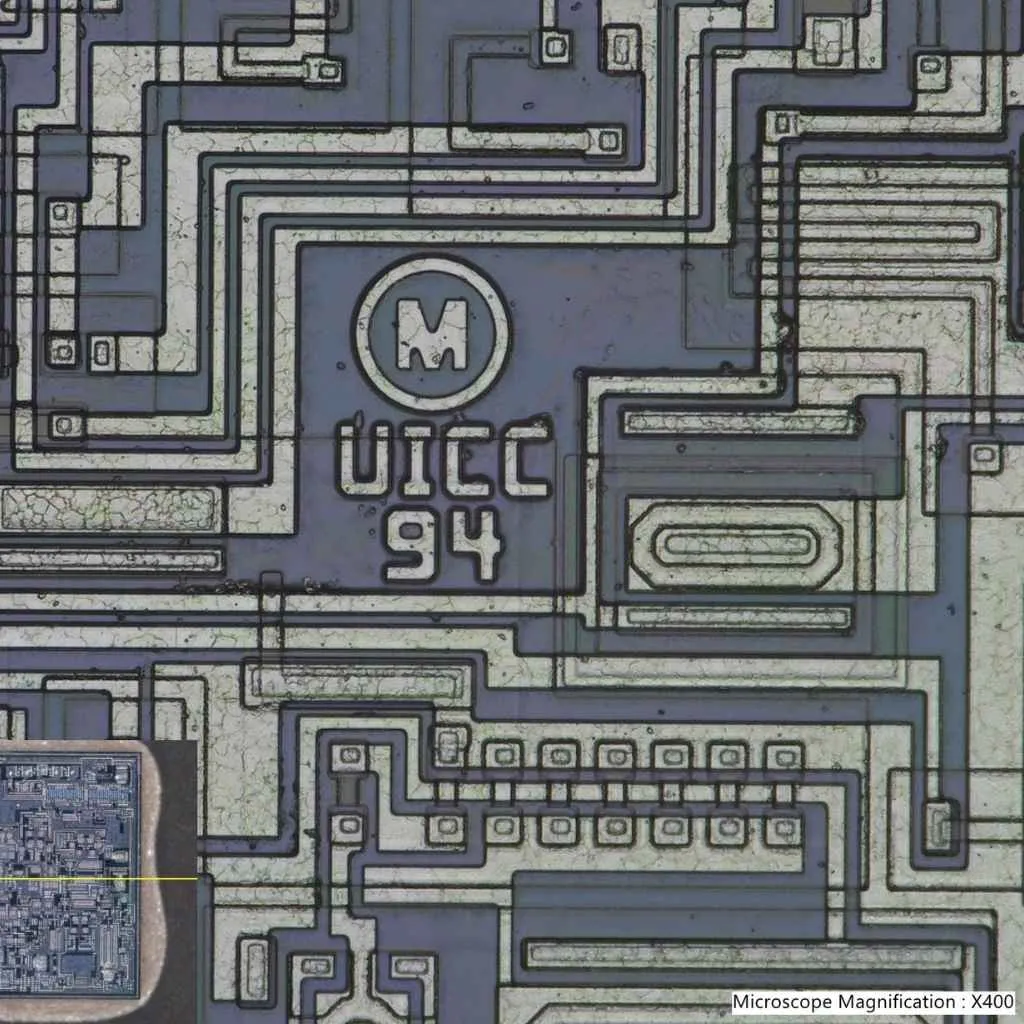
How MIL-STD-883 Applies Across the Microcircuit Assurance Lifecycle
- Device and technology qualification. Selected methods and procedures generate evidence about design, materials, construction, manufacturing controls, and stress response.
- Method 5004 and the applicable product specification organize stresses and tests used to remove detected defects and early failures.
- Qualification and quality conformance. Method 5005 provides procedures used with the applicable performance specification and device requirements.
- Lot and wafer acceptance. Method 5007 and related requirements support wafer or production-lot evidence where invoked.
- Destructive physical analysis. Method 5009 and relevant 2000-series methods support internal construction and workmanship evaluation.
- Failure analysis. Method 5003 provides a procedural framework for investigating failed microcircuits.
- PEM assurance. Selected MIL-STD-883 methods may support PEM qualification and screening, but the mission-specific PEM framework determines the complete program.
- Supplier and change evaluation. Comparative testing may help assess alternate sources, process changes, construction revisions, or lot-related concerns.
Relationship to MIL-PRF-38535 and MIL-PRF-38534
MIL-PRF-38535: Integrated Circuits and QML
MIL-PRF-38535 establishes the broader qualification and quality-management framework for integrated circuits. It addresses manufacturer qualification, QML controls, product classes, design and process controls, screening, conformance, documentation, and related requirements.
MIL-STD-883 supplies many of the test methods and procedures used within that framework. Performing selected MIL-STD-883 methods does not independently establish MIL-PRF-38535 compliance or QML status.
MIL-PRF-38534: Hybrid Microcircuits
MIL-PRF-38534 governs hybrid microcircuits and related multichip products. It provides manufacturer, process, product-level, screening, qualification, and conformance requirements for hybrid technology.
MIL-STD-883 supplies applicable methods, including internal visual, bond strength, radiography, die shear, and hybrid or multichip procedures. Selected method execution does not independently establish full MIL-PRF-38534 compliance or Class H, Class K, or Class E status.
MIL-STD-883 Testing Deliverables
AAA’s MIL-STD-883 deliverable package is expected to identify the exact method, revision, condition, sample, setup, acceptance basis, and measured result. Deliverables are tailored to the invoked method, product specification, screening or qualification procedure, and customer reporting requirement.
- Microcircuit, package, lot, date-code, and sample identification
- Invoked MIL-STD-883 method, revision, condition, procedure, and governing product requirement
- Test setup, fixtures, bias, load, orientation, monitoring, and environmental profile as applicable
- Electrical data, plots, radiographs, micrographs, measurements, and recorded failure modes
- Screening, qualification, conformance, DPA, or failure-analysis sequence records where applicable
- Acceptance criteria, observed failures, anomalies, parameter drift, and sample disposition
- Documented deviations, technical issues, customer approvals, and limitations
- Explicit DLA-suitability statement for applicable confirmed methods
- Certificate, final test report, raw data, and image package as defined by the approved scope
- Engineering summary and recommended escalation into DPA, failure analysis, PEM, radiation, or additional testing when required

What the Controlling Document Must Specify
MIL-STD-883 methods are designed to be invoked by another requirement. The controlling product specification, standard microcircuit drawing, source control drawing, contract, purchase specification, statement of work, or approved test plan should supply the details necessary to execute and interpret the method.
- Exact method and revision
- Condition, test condition letter, or option
- Device type, package, construction, and quality level
- Sample quantity, lot formation, and subgroup allocation
- Test sequence and preconditioning
- Electrical bias, load, operating mode, and monitoring
- Acceptance limits and failure criteria
- Resampling, disposition, and deviation authority
- Data, imagery, failure-mode, certificate, and report requirements
- Applicable MIL-PRF, drawing, or customer-specific requirement
Common Misapplications and Interpretation Errors
Calling Selected Method Testing Full MIL-STD-883 Compliance
A device is not fully compliant merely because one or more MIL-STD-883 methods were performed. Full compliance depends on the applicable general requirements, product framework, required procedures, manufacturer controls, and allowed deviations.
Using a Standard Number Without a Method and Condition
MIL-STD-883 contains many unrelated test methods and procedures. A quote or test request that omits the method, condition, sample plan, and acceptance basis is not technically complete.
Treating Burn-In and Life Testing as Synonyms
Burn-in is primarily a screening stress intended to precipitate early failures. Steady-state life and other life procedures address sustained operating behavior for a different assurance purpose.
Treating Temperature Cycling and Thermal Shock as Synonyms
Temperature cycling and thermal shock use different transfer rates, media, conditions, and stress profiles. They should not be substituted or described interchangeably.
Assuming a Passing Method Result Guarantees Mission Reliability
A passing result applies to the samples, conditions, limits, and procedure performed. It does not automatically establish response to every mission duration, radiation environment, system interaction, thermal profile, or manufacturing variation.
Ignoring Device Technology and Package Construction
Monolithic, hybrid, multichip, ceramic, metal-can, and plastic-packaged devices do not share identical construction or failure mechanisms. Method selection and preparation must reflect the actual technology.
When MIL-STD-883 Alone Is Not Sufficient
- MIL-PRF qualification and manufacturer controls. Required when the decision involves QML, product class, manufacturer qualification, or complete compliance.
- Destructive Physical Analysis. Required when representative samples must be evaluated for internal construction, materials, workmanship, or lot quality.
- Failure Analysis. Required when an observed failure or anomaly must be localized and explained.
- PEM Qualification and Screening. Required when a commercial plastic-packaged device needs mission-specific family, lot, construction, moisture, electrical, environmental, and radiation evidence.
- Radiation Hardness Assurance. Required when TID, SEE, displacement damage, or other radiation threats apply.
- System-level verification. Required when component-level methods do not capture board, software, power, thermal, mechanical, electromagnetic, or installation interactions.
- Counterfeit risk controls. Required when traceability, source history, identity, remarking, resurfacing, or material substitution is the primary concern.
Related Standards and Technical Comparisons
- MIL-STD-750. Applies to discrete semiconductor devices rather than microcircuits.
- MIL-STD-202. Provides test methods for many passive and electromechanical component parts.
- MIL-STD-1580. Provides the DPA framework for representative samples across multiple electronic, electromagnetic, and electromechanical part families.
- MIL-PRF-38535. Provides the integrated-circuit qualification and QML framework that invokes MIL-STD-883 methods.
- MIL-PRF-38534. Provides the hybrid microcircuit qualification and quality framework.
- NASA PEM-INST-001 and SAE AS6294. Provide PEM assurance frameworks that may invoke selected MIL-STD-883 methods.
- J-STD-020, J-STD-033, and JESD22-A113. Address moisture sensitivity, handling, and assembly preconditioning for nonhermetic surface-mount devices.
Relationship to AAA Testing
AAA executes customer-defined MIL-STD-883 methods and related microcircuit testing within its confirmed capability and credential scope. Commercial testing, screening, DPA, failure analysis, PEM qualification, environmental testing, electrical characterization, and radiation-assurance pathways are addressed on their dedicated pages.
This authority page explains the standard and routes engineers to the exact method or service needed. It does not replace the applicable method page, product specification, test plan, or customer-controlled acceptance requirement.
Information Needed to Define Applicable MIL-STD-883 Testing
- Manufacturer, part number, device technology, package, and construction
- Required method, revision, condition, or procedure
- Applicable MIL-PRF, drawing, purchase specification, contract, or customer flow
- Quantity, lot, date code, wafer or assembly traceability, and subgroup allocation
- Qualification, screening, conformance, DPA, failure-analysis, or research objective
- Electrical limits, bias, load, vectors, temperature, and monitoring requirements
- Destructive and nondestructive sample constraints
- Acceptance, resampling, deviation, and disposition authority
- Required raw data, imagery, failure modes, certificates, and report format
- Schedule, sample-retention, and customer-review requirements
Ready to qualify your next microcircuit lot with confidence?
Certifications




MIL-STD-883 Technical FAQ
Does AAA Engineering & Test Lab perform MIL-STD-883 testing?
Yes. AAA has achieved DLA suitability for specific MIL-STD-883 environmental, burn-in, life, visual, mechanical, radiographic, and physical-analysis methods within its approved scope.
Is AAA a DLA-suitable MIL-STD-883 testing laboratory?
Yes. AAA has achieved DLA suitability for specific MIL-STD-883 environmental, burn-in, life, visual, mechanical, radiographic, and physical-analysis methods within its approved scope.
Does AAA perform MIL-STD-883 TM 2012 Radiography?
Yes. AAA performs MIL-STD-883 TM 2012 Radiography and has achieved DLA suitability for the method within its approved scope.
Does AAA perform MIL-STD-883 TM 2011 Bond Strength?
Yes. AAA performs MIL-STD-883 TM 2011 Bond Strength and has achieved DLA suitability for the method within its approved scope.
Does AAA perform MIL-STD-883 TM 2019 Die Shear Strength?
Yes. AAA performs MIL-STD-883 TM 2019 Die Shear Strength and has achieved DLA suitability for the method within its approved scope.
Does AAA perform MIL-STD-883 TM 1015 Burn-In?
Yes. AAA performs MIL-STD-883 TM 1015 Burn-In and has achieved DLA suitability for the method within its approved scope.
Does AAA perform MIL-STD-883 TM 1010 Temperature Cycling?
Yes. AAA performs MIL-STD-883 TM 1010 Temperature Cycling and has achieved DLA suitability for the method within its approved scope.
Does AAA perform MIL-STD-883 TM 1004 Moisture Resistance?
Yes. AAA performs MIL-STD-883 TM 1004 Moisture Resistance and has achieved DLA suitability for the method within its approved scope.
Does AAA perform MIL-STD-883 TM 2010 Internal Visual (Monolithic)?
Yes. AAA performs MIL-STD-883 TM 2010 Internal Visual (Monolithic) and has achieved DLA suitability for the method within its approved scope.
What information does AAA need to quote MIL-STD-883 testing?
AAA needs the method, revision, condition, device and package information, quantity, lot structure, applicable MIL-PRF or drawing, electrical and environmental setup, acceptance limits, reporting requirements, and schedule.
Does MIL-STD-883 apply to all electronic components?
No. MIL-STD-883 applies to microelectronic devices. Discrete semiconductor devices are generally addressed by MIL-STD-750, while many passive and electromechanical components use MIL-STD-202 and their applicable product specifications.
What is the difference between a MIL-STD-883 method and a 5000-series procedure?
A method defines a specific test or measurement. A 5000-series procedure organizes multiple methods, samples, sequences, and controls into screening, qualification, conformance, DPA, failure-analysis, wafer-acceptance, or related program structures.
Can a laboratory certify a device as MIL-STD-883 compliant?
A laboratory can report that specified methods were performed to defined requirements. Full device compliance depends on the applicable manufacturer, product, process, qualification, documentation, and performance-specification framework.
What does DLA suitability mean for an individual method?
DLA suitability indicates that the laboratory has been found suitable for the identified standard or test method within its approved scope. It should be stated by exact method rather than represented as blanket coverage of every MIL-STD-883 activity.
Why are exact method numbers important when requesting testing?
The method number identifies the technical procedure. The condition, revision, sample plan, product requirement, and acceptance basis complete the executable scope.
Can MIL-STD-883 testing be used for plastic-encapsulated microcircuits?
Selected methods may be used within a PEM qualification or screening program. The complete PEM assurance plan must also address construction, traceability, moisture and reflow, electrical screening, mission environment, radiation, and change control as applicable.
Does passing MIL-STD-883 testing make a device space grade?
No. The result supports the defined test or assurance decision. Space suitability depends on the full mission, device, lot, qualification, radiation, reliability, and program-control framework.